

Why choose non-prescription glasses? Style, benefits & shopping
TL;DR:
- Non-prescription glasses are now popular for fashion, protection, and everyday comfort.
- They offer style versatility, UV protection, and physical eye shielding at affordable prices.
- Experts recommend consulting an optometrist for serious vision correction needs.
Glasses are no longer reserved for people with imperfect eyesight. Millions of adults across the UK and USA now choose non-prescription frames purely for fashion, comfort, and everyday protection. The global non-prescription glasses market sits at roughly $15 billion in 2025, growing at 6% annually, which tells you something important: this is not a niche trend. Whether you want to sharpen your look, shield your eyes from screens, or simply try something new without visiting an optometrist, non-prescription glasses offer a practical and stylish route. This article breaks down exactly why so many people are making the switch and what you need to know before buying.
Table of Contents
- Fashion and self-expression: Why style matters
- Practical benefits: More than just a fashion trend
- Affordability and accessibility: Smart shopping explained
- Expert advice and crucial considerations
- A fresh perspective: What most guides miss about non-prescription glasses
- Find your perfect look with quality non-prescription eyewear
- Frequently asked questions
Key Takeaways
| Point | Details |
|---|---|
| Style without prescription | Non-prescription glasses let you elevate your look with countless design options. |
| Practical daily benefits | They can offer basic eye protection but are not a replacement for prescription lenses. |
| Affordable and accessible | Easy to buy without a prescription and more budget-friendly than custom lenses. |
| Consider expert advice | If you need vision correction, consult a specialist before choosing non-prescription options. |
Fashion and self-expression: Why style matters
Non-prescription glasses have quietly become one of the most versatile accessories in modern wardrobes. They sit alongside watches, bags, and jewellery as items that communicate personality before you say a word. The shift is significant. Where glasses once signalled a medical need, they now signal taste.
Non-prescription glasses are chosen primarily for fashion, allowing adults to accessorise outfits without any vision correction requirement. Frames come in a vast range of styles, shapes, colours, and materials, from thin acetate to bold tortoiseshell. That variety means there is genuinely something for every face shape and personal aesthetic.
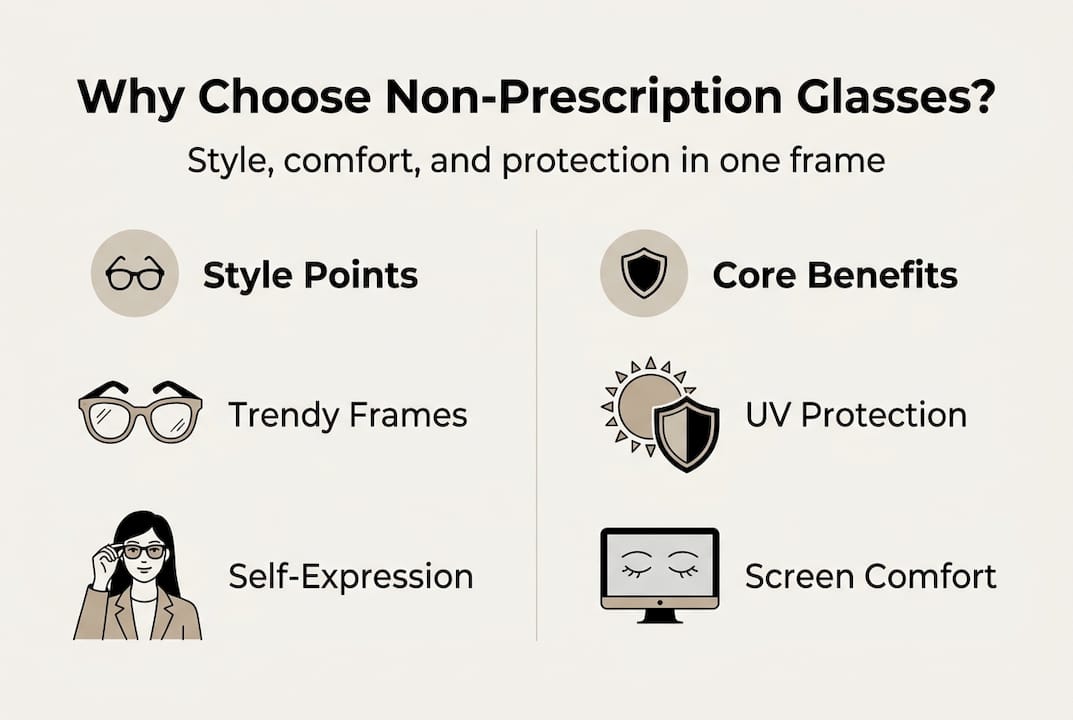
Celebrity culture has accelerated this shift. Celebrities like Justin Bieber wear them, making non-prescription frames equally at home in professional boardrooms and casual weekend settings. When public figures normalise a product, mainstream adoption follows quickly.
Here is a quick comparison of how non-prescription glasses stack up against other common fashion accessories:
| Accessory | Average cost | Versatility | Practical benefit |
|---|---|---|---|
| Non-prescription glasses | £10 to £50 | High | Eye protection, style |
| Sunglasses (fashion) | £15 to £80 | Medium | UV protection |
| Watch | £30 to £500+ | Medium | Timekeeping |
| Jewellery | £10 to £200+ | High | Style only |
For those exploring fashionable glasses across different age groups, the options have never been broader. From oversized retro frames to slim minimalist designs, the current market caters to every preference.
Key style benefits worth noting:
- Instant outfit upgrade without major investment
- Wide colour and material range including metal, acetate, and wood-effect finishes
- Unisex options suitable for any gender or style identity
- Seasonal flexibility, switching frames to match different looks
If you want to stay current, reviewing glasses style in 2026 gives a clear picture of what shapes and finishes are leading the market right now. For those who also need mild reading support, stylish reading glasses now combine function with genuine aesthetic appeal, removing the old trade-off between looking good and seeing clearly.
The bottom line on style: non-prescription glasses are not a compromise. They are a deliberate choice.
Practical benefits: More than just a fashion trend
Style is just one driver, but many users cite protection and comfort as prime reasons for choosing non-prescription glasses. The practical case is real, though it requires some nuance.
At the clearest end of the spectrum, non-prescription glasses offer eye protection including blue light filtering, UV protection, and shielding from dust, wind, and debris. These are tangible physical benefits that go beyond aesthetics.
Here is a summary of the main protective features available in non-prescription lenses:
| Feature | Benefit | Evidence strength |
|---|---|---|
| UV400 protection | Blocks harmful UV rays | Strong |
| Blue light filtering | Reduces screen glare | Moderate to low |
| Wraparound frames | Shields from wind and debris | Strong |
| Anti-reflective coating | Reduces glare from lights | Moderate |
UV protection is the strongest case. Frames with UV400 sunglasses protection block 99 to 100% of both UVA and UVB rays, which is a meaningful health benefit regardless of whether lenses are prescription or not.
Blue light blocking is more contested. Blue light blocking efficacy is low, with no significant evidence for reducing strain or improving sleep per randomised controlled trials and systematic reviews. That does not mean the glasses are useless. Anti-reflective coatings, which often accompany blue light lenses, do reduce glare from screens and artificial lighting, and many users report subjective comfort improvements.
Who benefits most from protective non-prescription eyewear?
- Office workers spending 6+ hours daily at screens
- Outdoor workers exposed to UV, dust, and wind
- Drivers who experience significant glare at night
- Cyclists and runners needing physical eye protection
Pro Tip: If screen comfort is your primary goal, prioritise frames with anti-reflective coating over marketing claims about blue light blocking alone. The coating delivers more consistent real-world benefit.
For those wanting to protect your eyes in style, the good news is that protective features and good design are no longer mutually exclusive. Understanding UV protection in sunglasses helps you make a genuinely informed choice rather than relying on packaging claims.
Affordability and accessibility: Smart shopping explained
Protection aside, affordability remains a key motivator. The financial case for non-prescription glasses is straightforward and significant.
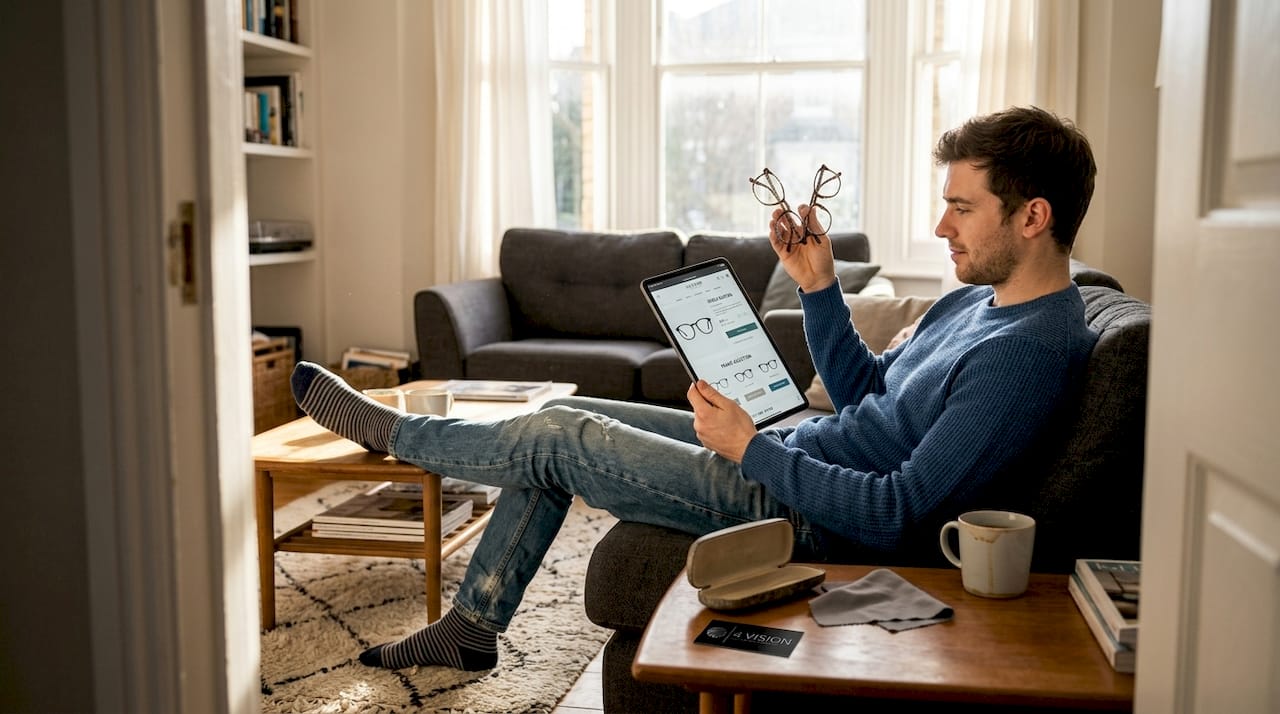
Non-prescription glasses are cheaper than prescription glasses because no custom lenses are needed, and they are easy to buy over the counter or online without an appointment. For fashion frames, this means you can own multiple pairs for the cost of a single prescription pair.
Non-prescription readers typically cost $10 to $50, with no eye exam required. In the UK, equivalent options sit between £8 and £40. Compare that to prescription glasses, which routinely cost £150 to £400 including lenses and frames, and the savings are obvious.
Here is a practical shopping guide for first-time buyers:
- Identify your primary use (fashion, reading support, screen use, or outdoor protection)
- Set a realistic budget before browsing to avoid impulse upgrades
- Check lens specifications for UV rating or coating details
- Measure your pupillary distance if buying online for better fit
- Read return policies carefully, particularly for online purchases
Pro Tip: Buying a few pairs at lower price points lets you experiment with different styles before committing to a signature look. Variety is one of the genuine advantages of non-prescription shopping.
“The global non-prescription glasses market is approximately $15 billion in 2025, with a CAGR of 6%, and 7% of the US population wears non-prescription glasses purely for style.”
The market data confirms this is mainstream behaviour, not a fringe choice. For those exploring reading glasses benefits beyond basic magnification, the range available online now includes premium finishes and durable materials at accessible prices. Browsing top fashionable glasses gives a clear sense of what is available at each price tier.
Accessibility is another underrated factor. Online retail has removed the geographic barrier that once limited eyewear choice to whatever your local optician stocked.
Expert advice and crucial considerations
No buying guide is complete without considering the limits and expert advice around non-prescription eyewear. There are situations where non-prescription glasses are the wrong choice, and being clear about those limits is important.
The core limitation is straightforward: non-prescription glasses are not suitable if you require vision correction and can cause eye strain if worn by someone with an uncorrected refractive error. Wearing flat lenses when your eyes need corrective power forces them to compensate, which leads to fatigue and headaches over time.
For mild presbyopia or occasional reading needs, the picture is more nuanced. Non-prescription readers are affordable for mild presbyopia but are inferior to prescription glasses for complex needs, and an eye exam should remain a priority for anyone experiencing consistent visual difficulty.
Key red flags that suggest you need a prescription rather than fashion frames:
- Persistent headaches after screen use or reading
- Blurred vision at any distance
- Squinting regularly to focus
- Eye fatigue that does not improve with rest
- Difficulty driving at night
“The 20-20-20 rule remains the most evidence-based tool for reducing digital eye fatigue: every 20 minutes, look at something 20 feet away for 20 seconds.”
This rule works regardless of what glasses you wear. It addresses the real cause of screen fatigue, which is sustained near-focus rather than blue light exposure alone.
For those who do not need vision correction, non-prescription glasses with quality premium eyewear features such as scratch-resistant lenses, lightweight frames, and durable hinges deliver genuine long-term value. The key is matching the product to your actual needs rather than buying on trend alone.
A fresh perspective: What most guides miss about non-prescription glasses
Most articles about non-prescription glasses treat them as either a trivial fashion gimmick or a functional necessity. Both framings miss the point. The most thoughtful buyers are doing something more interesting: they are treating eyewear as a hybrid solution that sits comfortably between style and practicality.
The real insight is that the divide between fashion and function is largely artificial. A well-chosen pair of non-prescription frames with UV400 protection and an anti-reflective coating delivers genuine daily value, not just a style moment. That combination, at a fraction of prescription costs, represents smart consumer thinking.
The buyers who get the most from non-prescription glasses are not chasing trends. They are prioritising fit, comfort, and specific protective features while also caring about how the frames look. Those priorities are not in conflict. Understanding eyewear features and durability before purchasing puts you in a far stronger position than relying on brand names or marketing alone.
The real innovation in this category is accessible quality. You no longer need to spend hundreds to get frames that look good, feel comfortable, and offer real protection.
Find your perfect look with quality non-prescription eyewear
If you are ready to upgrade your look or need a reliable pair for daily protection, 4 Vision offers a straightforward route to quality eyewear without the luxury markup.
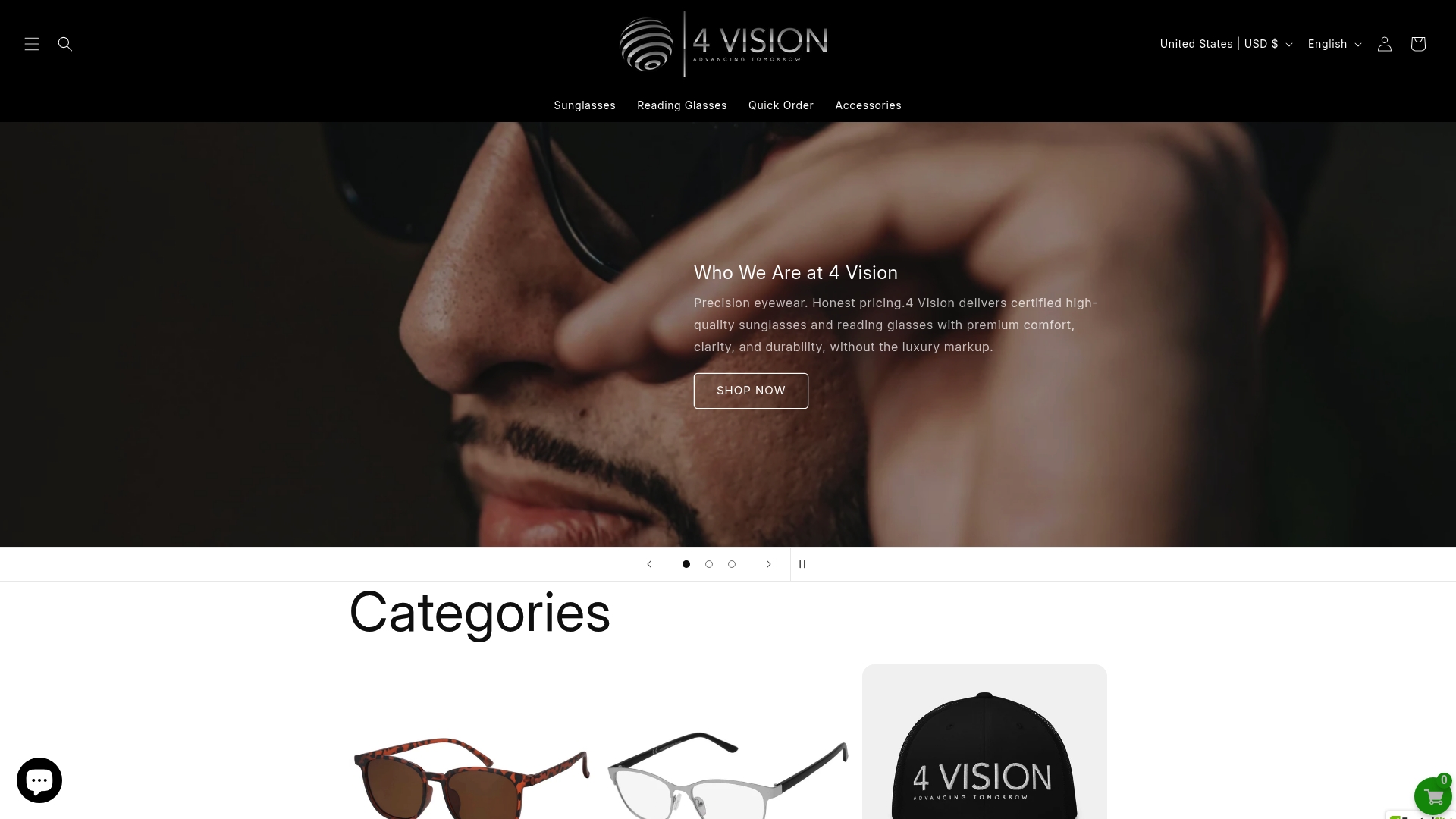
The premium eyewear guide covers exactly what to look for in frames and lenses, from materials and coatings to fit and durability. For those specifically exploring reading options, the reading glasses collection includes a wide range of styles suited to different face shapes and preferences. Fast delivery, honest pricing, and carbon-neutral shipping mean the practical side of shopping is handled. Browse the full range and find frames that work for your lifestyle, your budget, and your look.
Frequently asked questions
Are non-prescription glasses safe to wear every day?
Yes, they are safe for daily wear if you do not require vision correction. Ensure the fit is comfortable and the lenses do not cause strain, as poorly fitted frames can cause discomfort over extended use.
Do non-prescription glasses actually protect your eyes from screens?
They can reduce glare through anti-reflective coatings, but current research shows little evidence that blue light blocking lenses significantly reduce digital eye strain or improve sleep quality.
How much do non-prescription glasses cost in the UK and USA?
Most options range from £8 to £40 in the UK or $10 to $50 in the USA, making them considerably more affordable than prescription alternatives with no eye exam required.
Can I use non-prescription glasses for reading?
Yes, basic reading glasses are widely available and suit mild presbyopia well. For complex vision needs, prescription lenses from a qualified optometrist remain the more appropriate and effective choice.