

Protect your eyes in style: sunglasses and eye care
TL;DR:
- UV protection is essential year-round to prevent serious eye conditions like cataracts and AMD.
- Look for UV400 or 100% UV labels on sunglasses; darkness alone does not guarantee protection.
- Style and environment influence sunglasses choice, with wraparounds and large lenses offering maximum protection.
Sunglasses are one of the most underestimated tools in daily eye care. Most people reach for a pair on a bright summer day, treat them as a finishing touch to an outfit, and leave them at home the moment clouds roll in. That approach carries real risk. UV radiation reaches your eyes regardless of season, and the cumulative damage builds silently over years. This guide covers what UV exposure actually does to your eyes, which features genuinely protect you, and how to find styles that work as hard as they look good, whether you are commuting through London or hiking a trail in Colorado.
Table of Contents
- Why sunglasses are essential for eye health
- Choosing the right sunglasses: what matters most for protection
- Style and lifestyle: eye care without compromising fashion
- Year-round strategies and special cases in eye care
- What most people miss about sunglasses and eye care
- Find your perfect protective sunglasses
- Frequently asked questions
Key Takeaways
| Point | Details |
|---|---|
| Prioritise UV protection | Only sunglasses with UV400/100% UV protection labels defend eyes against harmful rays and prevent long-term damage. |
| Style does not sacrifice safety | Fashionable sunglasses can be highly protective by pairing correct features and stylish designs suitable for all occasions. |
| Protection is essential all year | UV risks persist in all weather and seasons, making sunglasses an everyday necessity for eye health. |
| Certified does not mean expensive | Costly brands are not required; inexpensive UV-certified sunglasses offer equally strong protection. |
Why sunglasses are essential for eye health
The sun emits two types of ultraviolet radiation that affect your eyes directly: UVA and UVB. Think of them the way you think about sunburn on skin. You would not skip sunscreen on a bright day, yet many people go years without proper eye protection. The damage is just as real, and just as cumulative.
Long-term UV exposure is linked to several serious conditions:
- Cataracts: clouding of the eye’s lens, the leading cause of preventable blindness worldwide
- Age-related macular degeneration (AMD): deterioration of the central retina, affecting reading and fine detail
- Pterygium: a growth on the white of the eye caused by UV and wind exposure
- Photokeratitis: essentially sunburn on the cornea, causing temporary but painful vision loss
Sunglasses with 100% UV protection block harmful UVA and UVB rays, preventing long-term eye damage of this kind. The protection is not cosmetic. It is structural.
One detail that surprises many people: cloudy days are not safe days. UV rays penetrate cloud cover with ease. Snow, water, and sand all reflect UV back upward, increasing your total exposure significantly. Sitting near a window, driving, or spending time near open water all count as UV exposure events.
Stat: UV exposure increases cataract risk; wraparound sunglasses reduce the UV reaching your eyes by 60 to 90 per cent, making frame shape one of the most important protective factors.
The NHS cataracts guidance also recommends sunglasses following eye surgery, recognising that recovering eyes are especially vulnerable to UV. For anyone who has had cataract removal or laser correction, this is not optional advice.
Understanding UV400 sunglasses for eye care is the first step toward making genuinely protective choices. The next is knowing which features on the label actually matter, and which are simply marketing.
Choosing the right sunglasses: what matters most for protection
Walking into a shop and picking the darkest lenses is one of the most common mistakes in eyewear. Darkness is not protection. It is simply tint.
Dark lenses without a UV label can actually cause harm. When your eyes are behind dark glass, your pupils dilate to compensate for the reduced light. If those lenses carry no UV filter, more UV radiation enters your eye than if you had worn nothing at all. That is a counterintuitive but well-documented risk.
Here is what to look for instead:
How to check for UV protection
- Look for the label UV400 or the phrase 100% UV protection on the lens or tag.
- Check that the label specifies both UVA and UVB coverage.
- Opt for wraparound or large-frame styles to reduce UV entering from the sides.
- If you own older pairs, take them to an optician for UV testing. Many will check for free.
- For children and frequent outdoor users, prioritise certified lenses above all other features.
Comparison: what features do and do not protect your eyes
| Feature | Protects against UV | Reduces glare | Notes |
|---|---|---|---|
| UV400 certification | Yes | No | Essential; non-negotiable |
| Polarised lenses | No | Yes | Useful for driving and water |
| Dark tint | No | Partially | Misleading without UV label |
| Wraparound frame | Partially | No | Reduces side UV exposure |
| Large lenses | Partially | No | Better coverage overall |
Polarisation is a common point of confusion. Polarised lenses reduce glare from reflective surfaces, which is genuinely useful when driving or near water. But polarisation reduces glare, not UV. You need both UV certification and polarisation for complete outdoor performance.
Pro Tip: Price is not a reliable indicator of UV protection. Inexpensive sunglasses are perfectly effective if they carry a genuine UV400 or 100% UV certification. Explore UV protection in sunglasses to understand exactly what the label means before you buy.
Once you know what to look for on the label, the next question is how to wear that protection every day without sacrificing your personal style.
Style and lifestyle: eye care without compromising fashion
Protection and style are not competing priorities. The right pair of sunglasses does both, and for most people the challenge is simply knowing which combinations work for their lifestyle.
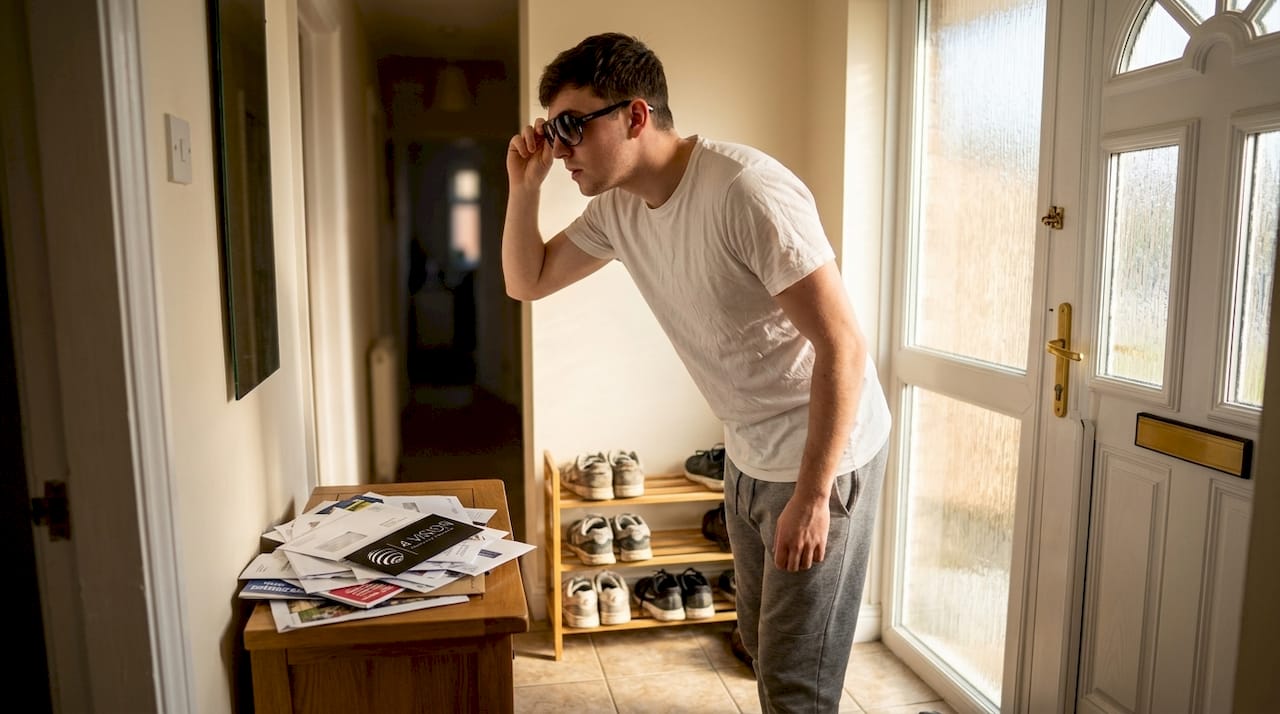
For city commuters, oversized frames and classic aviator shapes offer wide coverage and pair naturally with everyday clothing. For office workers who spend time near windows or commute by car, UV exposure is still a daily reality. For outdoor sports, wraparound frames with UV400 certification are the functional standard.
For stylish protective eyewear, prioritise the UV400 or 100% UV label over brand name or lens colour, and combine with wide-brim hats for maximum protection in direct sun.
Here are style combinations that maximise protection without compromising appearance:
- Wide-brim hat and UV400 sunglasses: the most effective outdoor combination, reducing UV from above and the sides
- Wraparound sport frames: ideal for cycling, running, and hiking; keeps lenses close to the face
- Large-frame fashion sunglasses with UV certification: covers the periorbital area (the skin around the eye) as well as the eye itself
- Photochromic lenses: adjust tint automatically indoors and outdoors, useful for variable UK weather
The data on long-term habits is clear. Studies show an inverse association between consistent sun protection and rates of cataracts and AMD. Because lifetime UV exposure is cumulative, starting protective habits early produces the greatest benefit over time.
UV exposure risk by environment
| Environment | Relative UV risk | Recommended protection |
|---|---|---|
| Beach or open water | Very high | UV400 sunglasses, wide-brim hat |
| Snow or ski slopes | Very high | Wraparound UV400 frames |
| City streets, summer | High | UV400 sunglasses |
| Overcast or winter day | Moderate | UV400 sunglasses |
| Indoor near windows | Low to moderate | UV-filtering glasses or lenses |
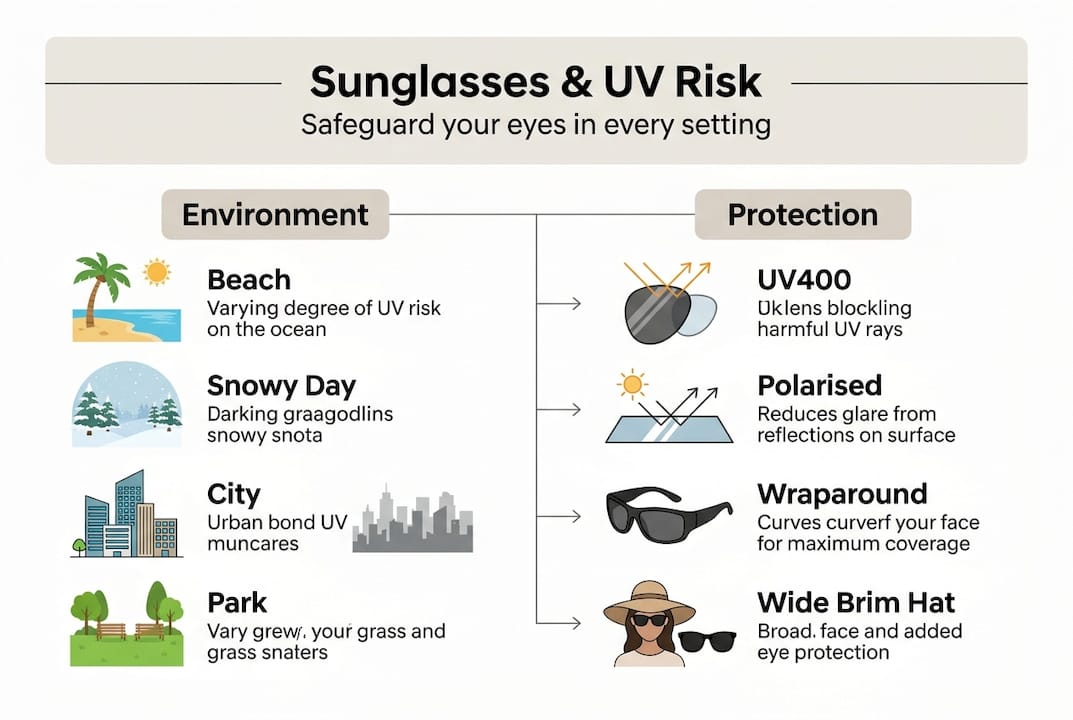
Exploring stylish sunglass categories helps match specific frame styles to specific environments. There are also fashionable glasses for all ages that balance protection with the aesthetics that matter to you.
Year-round strategies and special cases in eye care
Many people treat sunglasses as a summer item. That habit leaves eyes unprotected for most of the year.
Even cloudy days allow 80 to 90 per cent UV penetration; snow reflects UV upward, and wraparound frames with large lenses block side exposure that standard frames miss entirely. Year-round protection is not overcautious. It is accurate.
Steps for year-round eye protection
- Keep a UV400-certified pair in your bag or car at all times, not just in summer.
- Wear sunglasses during the two to four hours around midday when UV intensity peaks.
- Add a wide-brim hat on high-exposure days such as beach trips, skiing, or long outdoor events.
- Replace sunglasses if lenses are scratched or the UV coating has degraded.
- Schedule annual eye checks to monitor cumulative UV-related changes.
Special cases require specific attention:
Post-surgery patients. The NHS recommends sunglasses post-surgery for patients recovering from cataract removal. The eye is more photosensitive during recovery and UV exposure can slow healing.
Children. Young eyes transmit more UV to the retina than adult eyes because the lens is clearer. Kids UV sunglasses with certified UV400 protection are essential from an early age, not an optional accessory.
Water sports and skiing. Reflected UV from water and snow can be two to three times more intense than direct sunlight. Wraparound frames with UV400 certification and polarised lenses are the standard choice for these activities.
Pro Tip: Combine UV-blocking sunglasses with a wide-brim hat when spending extended time outdoors. The hat reduces UV reaching your eyes from above, which sunglasses alone cannot fully address.
For everyday use, lasting comfort sunglasses with UV400 certification are available across a wide range of styles and price points.
What most people miss about sunglasses and eye care
The most common mistake is not skipping sunglasses entirely. It is wearing the wrong pair with confidence. A dark, unbranded lens feels protective. It looks protective. But without UV certification, it is actively harmful, because dilated pupils behind an unfiltered dark lens absorb more UV than an unprotected eye in full daylight.
UV protection is primary; polarisation reduces glare but does not block UV, and inexpensive sunglasses are equally effective when UV certified. Brand name and lens colour are cosmetic choices. UV certification is a health choice.
The second thing most people miss is timing. Eye health is a cumulative investment. The UV your eyes absorb at 25 contributes to cataract risk at 65. Starting protective habits early, wearing certified sunglasses year-round, and building the hat-and-sunglasses combination into outdoor routines, produces measurable long-term benefit. Consider upgrading sunglasses for comfort and durability as part of that long-term approach.
Find your perfect protective sunglasses
Knowing what to look for is only half the process. Finding styles that you will actually wear every day is the other half.
4 Vision’s stylish sunglasses collection covers UV400-certified options across every frame style, age group, and activity. From wraparound sport frames to oversized fashion styles, every pair meets the UV protection standard that matters. For those new to quality eyewear, premium eyewear explained breaks down what separates genuine quality from marketing. And to complete your setup, browse eyewear accessories including cases, cleaning kits, and straps that keep your investment protected.
Frequently asked questions
What does UV400 mean on sunglasses?
UV400 sunglasses provide 99 to 100 per cent UVA and UVB blockage, making them the most effective standard for eye protection available in consumer eyewear.
Do darker sunglasses offer better eye protection?
No. Dark lenses without a UV label can increase UV exposure by causing pupils to dilate; only UV-certified lenses provide genuine protection regardless of tint depth.
Can I wear sunglasses year-round for eye care?
Yes. UV penetration on cloudy days reaches 80 to 90 per cent of clear-day levels, and snow reflection adds further exposure, making year-round wear the correct approach.
Are expensive sunglasses always better for protection?
No. Cheap sunglasses are equally effective when they carry genuine UV certification. Price reflects materials and brand, not UV protection level.