

Reading glasses: comfort, style, and vision benefits explained
TL;DR:
- Reading glasses with convex lenses correct near vision loss caused by presbyopia after 40.
- Proper eye exams are essential to determine the correct strength and rule out other conditions.
- Choosing stylish, well-fitting glasses with appropriate coatings enhances comfort and long-term vision health.
Around 1.8 billion people worldwide live with presbyopia, the age-related loss of near focus that creeps in after 40. Yet many adults spend years squinting at menus, holding books at arm’s length, or suffering needless headaches before reaching for a simple solution. Reading glasses are that solution. Affordable, stylish, and immediately effective, they restore the close-up clarity that presbyopia takes away. This guide covers how reading glasses work, who needs them, what types exist, and how to choose a pair that fits both your vision and your wardrobe.
Table of Contents
- What are reading glasses and how do they work?
- Who needs reading glasses and when?
- Types of reading glasses: over-the-counter vs. prescription
- How to choose stylish, affordable reading glasses
- Common pitfalls and getting the most from your reading glasses
- Our take: the truth about reading glasses nobody tells you
- Find your perfect reading glasses today
- Frequently asked questions
Key Takeaways
| Point | Details |
|---|---|
| Reading glasses explained | Reading glasses use convex lenses to restore comfort and clarity in near vision for adults with presbyopia. |
| Choose with care | Always confirm your vision needs with an eye exam before selecting your first reading glasses. |
| Style meets function | Modern reading glasses deliver both practical vision correction and contemporary looks without high costs. |
| Regular updates matter | Update your readers every 1–2 years for best comfort, safety, and effectiveness as vision changes. |
What are reading glasses and how do they work?
Reading glasses are purpose-built optical aids designed for one job: making close objects sharp again. Unlike distance glasses or varifocals, they correct only near vision, which makes them straightforward, lightweight, and easy to use.
At the heart of every pair sits a convex lens. Convex means the lens curves outward, thicker in the middle than at the edges. This shape bends incoming light inward before it reaches the eye. In a young, healthy eye, the natural lens flexes to do this automatically. After 40, the lens stiffens and loses that flexibility. Reading glasses are convex, single-vision lenses that compensate by doing the bending work the eye can no longer manage alone.
The table below shows what happens at each stage:
| Vision state | What the eye does | What you see |
|---|---|---|
| Normal (under 40) | Lens flexes freely | Near and far objects sharp |
| Presbyopic (40+) | Lens stiffens, cannot flex | Close objects blurred |
| Corrected with readers | Convex lens bends light | Close objects sharp again |
The strength of reading glasses is measured in dioptres, labelled as +1.00, +1.50, +2.00, and so on. Most adults start around +1.00 to +1.50 in their early 40s and gradually need stronger lenses as presbyopia advances.
Common symptoms that suggest you may need reading glasses:
- Blurred text at normal reading distance
- Holding books, phones, or menus further away than feels natural
- Headaches after reading or close work
- Eye fatigue at the end of the day
- Squinting to read small print
Modern stylish reading glasses come in hundreds of frame styles, so there is no reason to settle for a pair that feels clinical or dull. The optical function is simple, but the design possibilities are wide. If you want to explore what is currently trending in eyewear, fashionable glasses options give a useful overview of 2026 styles worth considering.
For a deeper look at how optometrists approach correcting presbyopia, clinical resources outline the full range of treatment pathways, from readers to surgery.
Who needs reading glasses and when?
Presbopia does not discriminate. It affects people regardless of whether they previously had perfect vision, wore contact lenses, or already used distance glasses. Presbyopia affects 62% of Americans over 40, and the global picture is similar across all populations.
Most people notice the first signs between the ages of 40 and 45. The progression is gradual, which is why many dismiss early symptoms as tiredness or poor lighting rather than a vision change.
Signs that it may be time to consider reading glasses:
- You consistently hold reading material at arm’s length to bring it into focus.
- Bright light helps you read but dim light makes text almost impossible.
- You get headaches or feel eye strain after 20 to 30 minutes of close work.
- You find yourself enlarging text on your phone or tablet regularly.
- Reading feels effortful in a way it did not a year ago.
Before purchasing any pair, an eye exam is recommended by ophthalmologists. This is not just a formality. An eye exam confirms that blurred near vision is caused by presbyopia and not by something else, such as early-stage glaucoma, cataracts, or undiagnosed short-sightedness. These conditions require different treatment and can be missed if you simply buy off-the-shelf readers without professional assessment.
Pro Tip: Do not guess your lens strength by trying pairs in a pharmacy. A proper refraction test from an optometrist gives you an accurate starting point and prevents you from overcorrecting, which causes its own problems.
For guidance on choosing eyewear that balances style, function, and sustainability, there are practical frameworks worth reading before you shop.
Types of reading glasses: over-the-counter vs. prescription
Once you know you need reading glasses, the next decision is which type to buy. There are two main categories, and each suits a different situation.
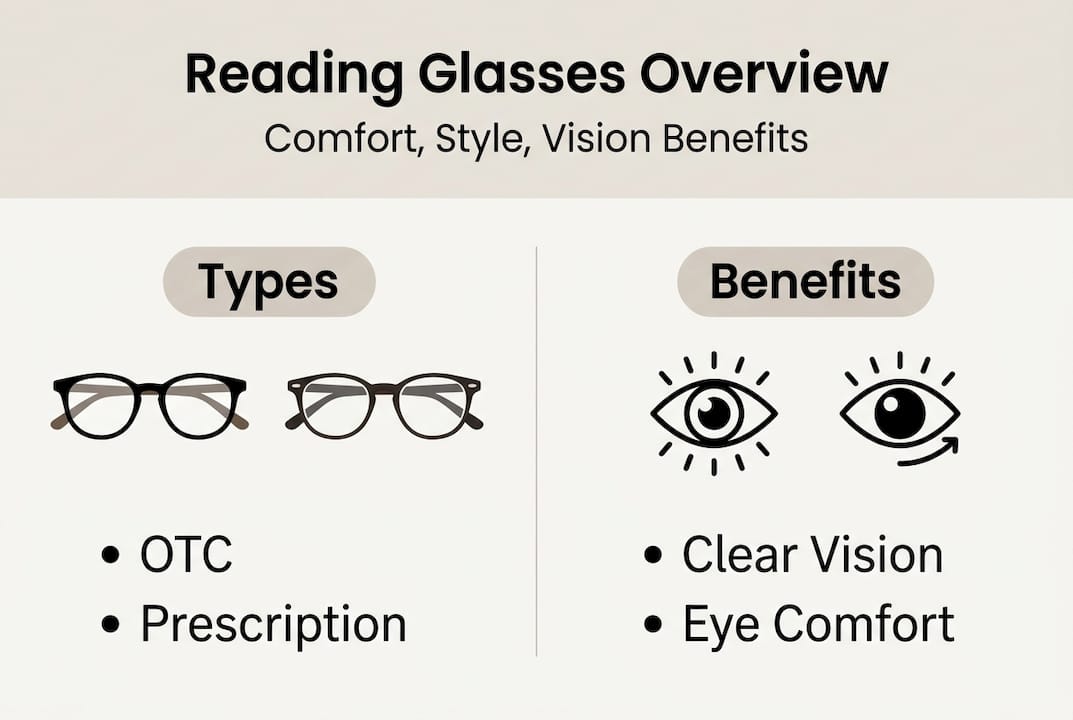
Over-the-counter (OTC) reading glasses are pre-made in standard strengths and sold without a prescription. Both lenses carry the same power, which works well for people whose presbyopia is equal in both eyes and who have no other refractive errors. OTC reading glasses are sufficient for pure presbyopia but are not appropriate if you have astigmatism, significant differences between eyes, or other vision conditions.
Prescription reading glasses are made to your exact measurements. They account for differences between eyes, correct astigmatism, and can include features like progressive zones if you also need distance correction. They cost more but deliver a more precise result for complex vision needs.
| Feature | OTC readers | Prescription readers |
|---|---|---|
| Cost | Low (£5 to £30) | Higher (£80 to £300+) |
| Suitable for | Equal presbyopia, no other issues | Astigmatism, unequal eyes, complex needs |
| Availability | Immediate | Requires optometrist visit |
| Lens precision | Standard | Customised |
| Frame choice | Limited to stock | Wide, including premium options |
Useful features to look for in either type:
- Anti-reflective coating: Reduces glare from screens and overhead lighting.
- Blue light filtering: Anti-reflective and blue light coatings improve comfort during extended digital use.
- Scratch-resistant lenses: Extends the life of the glasses significantly.
- Lightweight frames: Titanium or acetate frames reduce pressure on the nose and ears.
- Spring hinges: Allow a more flexible, comfortable fit across different head sizes.
Pro Tip: Always use the minimum effective strength. Starting with too strong a lens forces your eyes to adapt unnecessarily and can cause dizziness or headaches.
Browsing a curated premium reading glasses collection online lets you compare styles and coatings side by side, which is harder to do in a physical shop. Understanding the quality eyewear benefits of better-made frames also helps justify the investment in a pair that lasts.
How to choose stylish, affordable reading glasses
Style and function are not in conflict when it comes to reading glasses. The right pair should feel comfortable, look good, and sit correctly on your face without slipping or pinching.
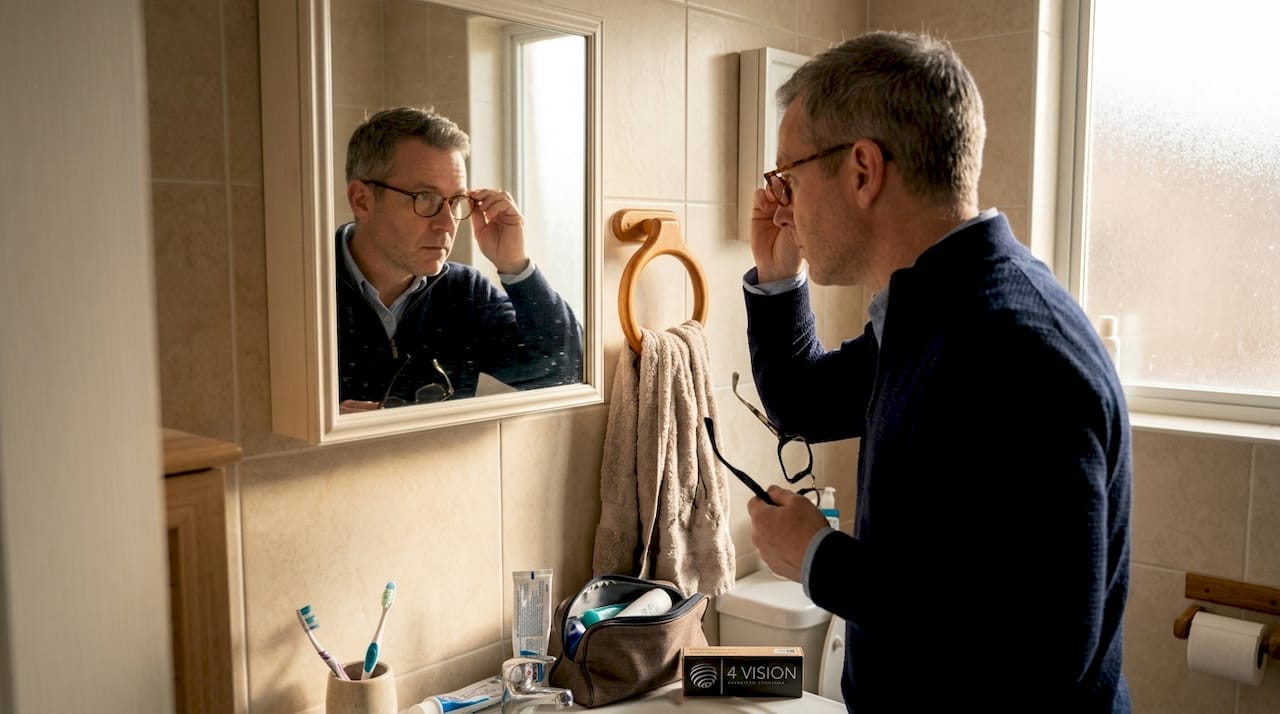
Face shape is a practical starting point. Oval faces suit most frame shapes. Round faces benefit from angular or rectangular frames. Square faces are softened by rounder or oval frames. Heart-shaped faces look balanced with frames that are wider at the bottom. These are not rigid rules, but they provide a useful filter when browsing.
Colour choice matters more than people expect. Neutral tones like tortoiseshell, black, and gold work across most skin tones and outfits. Bolder colours or patterns can reflect personality and make glasses a deliberate accessory rather than a medical necessity.
Vision correction improves task performance and quality of life in measurable ways, which means the functional case for a good pair is as strong as the aesthetic one.
Criteria to compare when choosing reading glasses:
- Correct lens strength for your prescription or OTC assessment
- Frame material (acetate, metal, or mixed) for durability and weight
- Lens coating options (anti-reflective, blue light, scratch-resistant)
- Fit: nose pad style, temple length, and overall frame width
- Style compatibility with your wardrobe and face shape
- Price point relative to quality and expected lifespan
- Return or exchange policy when buying online
Shopping online offers a wider range at lower prices than most high-street opticians. Guides on fashionable glasses for all ages help narrow down options by style category. If speed matters, checking fast eyewear delivery options ensures you are not waiting weeks for a pair you need now.
Common pitfalls and getting the most from your reading glasses
Choosing the right glasses is just the start. Wearing and caring for them correctly ensures years of comfortable vision and avoids unnecessary strain.
Common mistakes to avoid:
- Overcorrecting. Stronger is not better. Overcorrection strains eyes and can cause dizziness, nausea, and headaches. Start at the lowest strength that gives clear near vision.
- Ignoring changes. Presbyopia progresses. A pair that worked perfectly two years ago may now be too weak. Blurred vision despite wearing readers is a clear sign to re-test.
- Skipping professional re-assessment. Eyes should be checked every one to two years, even if you feel your readers are still working. Other conditions can develop silently.
- Using one pair for everything. Reading distance and screen distance differ. A pair optimised for a book held at 35 cm may not work for a computer screen at 60 cm.
- Neglecting lens care. Dirty or scratched lenses cause unnecessary strain. Clean with a microfibre cloth and lens-safe solution, not clothing fabric.
Pro Tip: Keep a spare pair in your bag or at your desk. Presbyopia does not take days off, and losing your only pair mid-task is a frustrating and avoidable problem.
“The goal of reading glasses is to make close work effortless. If you are still straining, something is wrong with the fit, strength, or prescription.”
For more on enhancing comfort with glasses, practical tips on fit and wear habits make a real difference over time. Staying informed about presbyopia progression also helps you anticipate changes before they affect your daily life.
Our take: the truth about reading glasses nobody tells you
Here is something the eyewear industry rarely admits: most people over 40 do not need expensive designer readers. They need the right readers. Correct strength. Proper fit. Good lens quality. That is it.
The marketing around premium eyewear brands is persuasive, but the optical function of a well-made £20 pair and a £200 branded pair is often identical. What differs is the logo on the arm. The lens does the same job.
What genuinely matters is updating your glasses as your vision changes, choosing a frame that sits comfortably for hours, and selecting coatings that match how you actually use your eyes. Screen time, reading habits, and lighting conditions all influence which features add real value.
Investing in quality eyewear means investing in the right construction and optical clarity, not a brand name. Confidence and comfort come from clear, pain-free vision. They do not come from a label.
Find your perfect reading glasses today
If blurred close vision, tired eyes, or squinting at small print sounds familiar, the right pair of reading glasses can change your daily experience immediately.
At 4 Vision, the reading glasses collection brings together styles that balance optical quality, frame comfort, and design at honest prices. For those wanting a step up in precision and finish, the elite ReaderPro option offers a refined choice worth considering. If you are still weighing up what makes eyewear worth buying, discover premium eyewear breaks down what quality actually means in practical terms. Better reading starts with the right pair.
Frequently asked questions
Do I need an eye exam before buying reading glasses?
Yes. An eye exam before OTC readers confirms presbyopia and rules out other conditions that require different treatment.
Can wearing reading glasses worsen my eyesight?
No. Readers do not worsen vision, but overcorrection causes strain and discomfort if the strength is too high for your needs.
How often should I update my reading glasses?
Re-test your vision every one to two years. Presbyopia develops gradually, so your required strength will increase over time.
Are over-the-counter reading glasses safe?
Yes, for straightforward presbyopia. OTC readers are suitable when both eyes have equal presbyopia and no other refractive conditions are present.