

Why invest in quality eyewear: style, comfort, sustainability
Cheap sunglasses from a market stall might seem like a bargain, but they often cost far more over time. Lenses that scratch within weeks, frames that warp in the heat, and zero UV protection add up to repeated replacements and potential eye damage. Quality eyewear, by contrast, is built to last, designed to flatter, and increasingly made with the planet in mind. This guide walks through what genuinely defines quality eyewear, how to balance style with comfort, why sustainable materials matter, and how to get real value without overspending.
Table of Contents
- What defines quality eyewear?
- Style meets functionality: Choosing eyewear for both look and comfort
- Sustainability and ethical materials: Eco-friendly eyewear for the conscious shopper
- Affordability and value: Getting more for your money
- Practical steps: How to choose quality eyewear for your lifestyle
- Find your next stylish, sustainable pair
- Frequently asked questions
Key Takeaways
| Point | Details |
|---|---|
| Durability matters | Quality eyewear lasts longer, reducing waste and replacement costs. |
| Sustainable choices | Eco-friendly materials support the environment and deliver lasting value. |
| Style and comfort | Premium designs ensure you look good and feel comfortable all day. |
| Affordable options available | Mid-tier quality brands offer style, protection and value at reasonable prices. |
| Practical buying tips | Use expert criteria to select quality eyewear that fits your fashion and lifestyle needs. |
What defines quality eyewear?
Not all eyewear is created equal. The difference between a pair that lasts two seasons and one that lasts two weeks comes down to materials, construction, and intent.
Quality frames are typically made from acetate, titanium, stainless steel, or TR-90 nylon. Each offers a different balance of weight, flexibility, and durability. Acetate, for instance, is hypoallergenic and holds colour well. Titanium is featherlight and corrosion-resistant. These are not marketing terms. They are measurable properties that affect how a frame feels after eight hours of wear.
Construction matters just as much. Hinges should be spring-loaded or barrel-style with multiple screws. Lenses should sit flush without gaps. Nose pads should be adjustable. These details separate eyewear that fits from eyewear that merely sits on your face.
Sustainability credentials are now a genuine quality marker. Eco-friendly eyewear brands such as Proof Eyewear use FSC-certified wood in their frames, while others use bio-acetate derived from plant cellulose rather than petroleum. Understanding what designer eyewear actually means helps separate genuine craftsmanship from inflated branding.
Key quality indicators to look for:
- Lens material: polycarbonate or glass with UV400 rating
- Frame material: acetate, titanium, or recycled plastics
- Hinge type: spring hinges for longevity
- Certifications: CE marking, UV400, or FSC for eco-frames
- Fit: adjustable nose pads and temple arms
“Brands like Jacques Marie Mage offer collectible designs; Proof Eyewear uses FSC-certified wood” confirming that quality and sustainability can coexist at the product level.
Exploring premium eyewear features in detail reveals how these construction choices translate into real-world durability and comfort.
Style meets functionality: Choosing eyewear for both look and comfort
Understanding what makes eyewear quality, let us see how these features translate into style and comfort for everyday wear.
Style is not superficial. Research consistently shows that accessories influence how others perceive confidence and competence. The right frame shape for your face, the right lens tint for your colouring, and the right weight for your lifestyle all contribute to how you carry yourself throughout the day.
Functionality, however, must keep pace with aesthetics. A beautiful frame that slides down your nose every twenty minutes is not a quality product. Key functional features include:
- Lightweight construction: frames under 30 grams reduce fatigue during extended wear
- UV400 protection: blocks 99 to 100 per cent of UVA and UVB rays
- Polarised lenses: reduce glare from reflective surfaces such as water and roads
- Adjustable fit: nose pads and flexible temples accommodate different face shapes
- Scratch-resistant coatings: extend lens clarity over time
| Feature | Budget eyewear | Mid-tier eyewear | Premium eyewear |
|---|---|---|---|
| UV protection | Often absent | UV400 standard | UV400 with polarisation |
| Frame material | Cheap plastic | Acetate or TR-90 | Titanium or bio-acetate |
| Lens quality | Basic tint | Polycarbonate | Glass or premium poly |
| Durability | Months | 2 to 3 years | 5 or more years |
| Eco credentials | None | Partial | Full certification |
Mid-tier brands consistently deliver style and comfort at accessible prices. UK sustainable eyewear choices demonstrate that quality and daily practicality are not mutually exclusive. Guidance on choosing eyewear that suits both your wardrobe and your routine is a practical starting point.
Pro Tip: Try frames in natural light before committing. Artificial shop lighting can mask lens tint and frame colour inaccuracies that become obvious outdoors.
Sustainability and ethical materials: Eco-friendly eyewear for the conscious shopper
With comfort and style sorted, let us turn to how your choices impact the environment and support ethical brands.
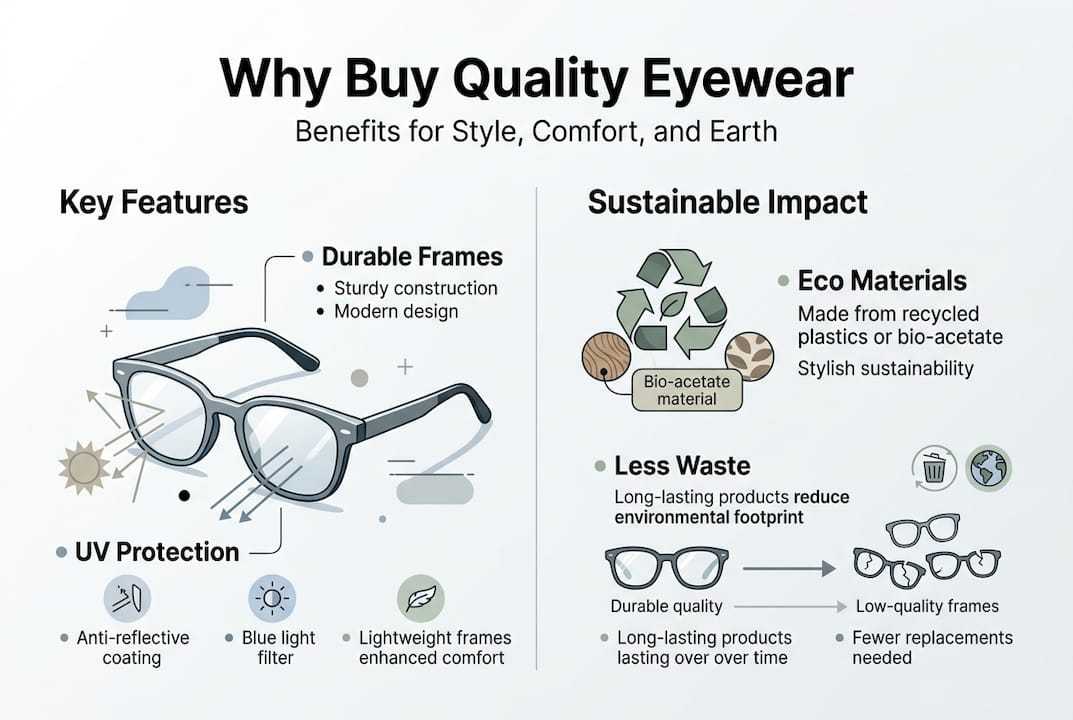
The eyewear industry produces significant plastic waste. Most budget frames are made from virgin petroleum-based plastics that take centuries to break down. Choosing sustainable materials is not just an ethical preference. It is a practical one, because eco-materials like bio-acetate and recycled plastic are often more durable than their conventional counterparts.

| Brand | Material used | Sustainability feature |
|---|---|---|
| Proof Eyewear | FSC-certified wood | Renewable sourcing |
| Quince | Eco-acetate | Plant-based cellulose |
| Sunski | Recycled plastic | Diverts ocean-bound waste |
| Vinco | Wood biopolymer | Biodegradable performance frames |
Brands like Quince and Sunski use recycled plastics and eco-acetate to produce eyewear that is both stylish and responsible. Vinco uses wood biopolymer for performance sunglasses, proving that sustainable materials can meet the demands of active lifestyles without compromise.
Key sustainable materials to look for:
- Bio-acetate: plant-derived, biodegradable alternative to standard acetate
- Recycled plastics: reduces landfill and ocean plastic burden
- FSC-certified wood: sourced from responsibly managed forests
- Recycled metals: aluminium and stainless steel with lower carbon footprints
Statistic to note: The global eyewear market generates millions of discarded frames annually. Choosing one pair of quality, sustainable eyewear over three pairs of cheap alternatives reduces your personal contribution to that figure significantly.
Pro Tip: Look for brands that publish their supply chain information. Transparency about sourcing is one of the clearest signals of genuine ethical practice.
Exploring affordable sustainable eyewear options and browsing sunglass categories by material can help narrow your search quickly.
Affordability and value: Getting more for your money
After examining eco-friendly considerations, it is time to address affordability. Can you really get quality without overspending?
The short answer is yes. The longer answer involves understanding where the value actually sits. Luxury eyewear brands charge for heritage, marketing, and exclusivity. Mid-tier brands charge for materials and construction. That distinction matters when you are deciding where to spend.
Mid-tier sustainable brands like Quince and Knockaround in the £20 to £35 range deliver UV400 protection, durable frames, and genuine style without the luxury markup. That is not a compromise. That is a smarter allocation of your budget.
What makes affordable eyewear genuinely valuable:
- Longevity over replacement cycles: one pair lasting three years beats three pairs lasting one year each
- UV protection included as standard: not an optional upgrade
- Consistent sizing: quality control means the frame you order fits as expected
- Warranty or repair options: brands confident in their product back it up
- Style versatility: neutral designs that work across multiple outfits and occasions
Pro Tip: Calculate cost per wear rather than upfront price. A £35 pair worn daily for two years costs less than 5p per day. A £10 pair replaced every three months costs far more over the same period.
Knowing how to buy sunglasses online and understanding UV protection standards are two practical skills that help you assess value before purchasing.
Practical steps: How to choose quality eyewear for your lifestyle
With value and affordability clear, let us wrap up with concrete steps for picking quality eyewear that fits your lifestyle.
Choosing eyewear is not complicated when you have a clear framework. Quality eyewear lasts longer, fits better, protects your eyes, and complements your style. The goal is to match those qualities to your specific needs.
- Define your primary use: daily commuting, outdoor sport, reading, or occasional wear each require different features
- Identify your face shape: oval, round, square, and heart-shaped faces suit different frame geometries
- Set a realistic budget: factor in longevity, not just upfront cost
- Check material credentials: look for bio-acetate, recycled plastics, or FSC-certified wood
- Verify UV protection: UV400 is the minimum standard for outdoor eyewear
- Assess fit before buying: use virtual try-on tools or check return policies when shopping online
- Research the brand: look for supply chain transparency and genuine sustainability claims from eco-conscious eyewear brands
Pro Tip: When shopping online, prioritise retailers that provide detailed measurements including lens width, bridge width, and temple length. These three numbers determine whether a frame will actually fit your face.
Using eyewear selection tips alongside a clear understanding of what premium eyewear actually delivers makes the decision straightforward rather than overwhelming.
Find your next stylish, sustainable pair
The next step is finding quality eyewear that suits you, and that is exactly where 4 Vision comes in. The range covers everything from premium sunglasses with UV400 protection to premium reading glasses built for comfort and clarity. Every product is selected with style, durability, and value in mind, cutting out the luxury markup without cutting corners on quality.
If you are still working out what to look for, the premium eyewear guide covers the essentials in plain language. Whether you are after a versatile everyday pair or something more statement-making, the catalogue is built to help you find the right fit at the right price, with carbon-neutral shipping included as standard.
Frequently asked questions
How does quality eyewear help the environment?
Quality eyewear uses eco-materials like bio-acetate and recycled plastic, which reduces waste and supports responsible production. Longer-lasting frames also mean fewer replacements and less landfill contribution overall.
Can I find affordable quality eyewear?
Yes. Mid-tier sustainable brands like Quince and Knockaround deliver UV400 protection, durable construction, and genuine style at prices well below luxury alternatives.
What features should I look for in quality eyewear?
Prioritise UV400 protection, durable frame materials, sustainable credentials, and a comfortable fit. Durable materials and UV protection are the baseline for any pair worth buying.
Do quality glasses last longer than cheap ones?
Yes. Superior materials and construction mean quality frames outlast budget alternatives by years. Eco-friendly quality eyewear brands in particular design for longevity as a core product value.
How do I pick the right frame for my face?
Consider your face shape, lifestyle, and style preferences. Quality eyewear blends function and style across diverse designs, so there is a well-made option for every face shape and occasion.