

Organise eyewear accessories stylishly: 5 practical steps
Searching for your sunglasses in a cluttered drawer whilst running late is one of those small frustrations that adds up fast. Scratched lenses, tangled chains, and missing cases are not just annoying — they cost you money and time. A well-organised eyewear setup solves all of this. It keeps your accessories in top condition, makes your morning routine smoother, and can even become a stylish feature of your home. This article covers how to assess your collection, choose the right organiser, arrange everything properly, avoid common mistakes, and maintain the system so it stays sharp.
Table of Contents
- Assess your eyewear accessory needs
- Select the best organiser: styles, materials and space-saving options
- Step-by-step: organise and display your eyewear accessories
- Common mistakes and how to avoid them
- Maintaining your organised eyewear: cleaning, protection and regular checks
- Our take: why style and smart storage matter more than ever
- Find curated accessories and organisers for the perfect finish
- Frequently asked questions
Key Takeaways
| Point | Details |
|---|---|
| Tailored solutions | Assess your accessories, collection size, and space to choose the ideal organiser setup. |
| Protection and style | Combine velvet-lined, display, and covered storage to balance upkeep, security, and aesthetics. |
| Avoid common pitfalls | Prevent damage with correct placement, regular cleaning, and avoiding extreme temperatures. |
| Maintain and refresh | Monthly checks and seasonal refreshes keep your eyewear area neat and fashion-forward. |
Assess your eyewear accessory needs
Before buying a single organiser, take stock of what you actually own. Most people are surprised by how many eyewear accessories have quietly accumulated. A typical collection might include everyday reading glasses, prescription frames, sunglasses for different seasons, hard and soft cases, microfibre cleaning cloths, lens sprays, chains and cords, spare nose pads, and even spare lenses for interchangeable styles.
Once you know what you own, think about where it will live. A vanity or dressing table suits open display trays. A wardrobe or closet works well for stacked boxes. A hallway or entryway benefits from a wall-mounted rack. A small flat calls for hanging pocket organisers. Each space has a different organiser that fits best, and eyewear storage ideas confirm that different organiser styles offer unique benefits depending on collection size and available space.
When choosing eyewear and accessories, it helps to think about storage at the same time. Bulkier frames need wider slots. Delicate chains need separate compartments. Use the table below to match your situation to the right organiser type.
| Organiser type | Best for | Space needed | Security level |
|---|---|---|---|
| Drawer insert | Medium collections | Low | High |
| Wall rack | Display-focused setups | Minimal | Low |
| Hanging pocket | Small spaces | Minimal | Medium |
| Lidded box | Delicate or designer pieces | Low to medium | High |
Before settling on a solution, ask yourself these questions:
- How many pairs of glasses and sunglasses do you own?
- Which accessories do you reach for daily versus occasionally?
- Is dust or sunlight a concern in your chosen storage area?
- Do you share the space with others?
- How much wall or drawer space is realistically available?
Pro Tip: Group your eyewear by how often you use it. Daily pieces go at the front or top. Occasional items go further back. This one habit alone can save several minutes each morning.
Exploring the best accessories for glasses before you organise helps you identify any gaps in your collection too.
Select the best organiser: styles, materials and space-saving options
With your needs mapped out, the next step is choosing an organiser that suits both your practical requirements and your home’s aesthetic. The market offers a wide range of options, and the right choice depends on your décor, collection size, and how much protection your frames need.
Open display racks are ideal for those who treat eyewear as part of their home décor. They offer instant visibility and quick access. The trade-off is exposure to dust and light. Lidded organisers and boxes provide better protection and suit delicate or designer frames. Velvet trays are a popular mid-ground: they look elegant, protect lenses from scratching, and fit neatly inside drawers. Acrylic boxes are modern and transparent, making it easy to see contents at a glance. For travel, a dedicated Away Travel glasses case adds structure and protection on the move.
Material matters too. Acrylic is durable and easy to clean. Velvet feels luxurious and cushions lenses well. Bamboo is sustainable and suits natural or Scandi-inspired interiors. Metal racks are sturdy and long-lasting but can scratch frames if slots are too tight.
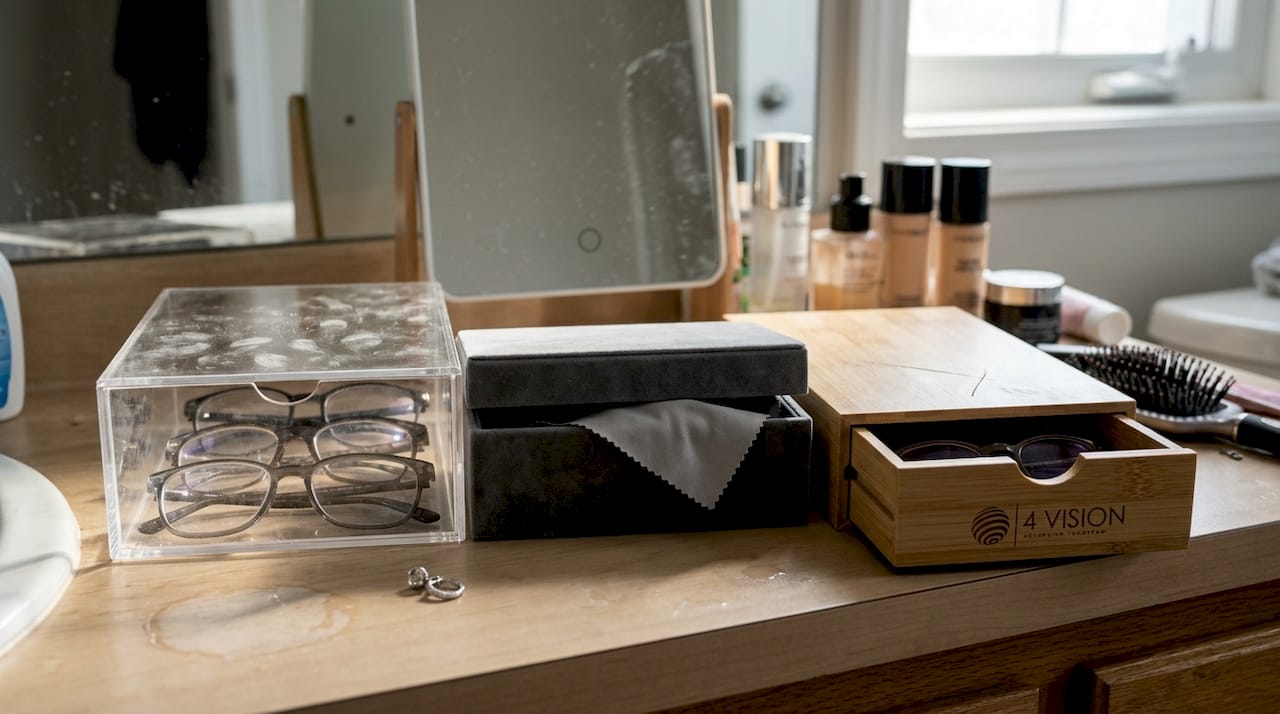
As the organiser styles guide notes, velvet-lined slots prevent scratches, while wall-mounted racks and pocket organisers are strong space-saving choices.
| Organiser style | Space efficiency | Price range | Protection | Aesthetics |
|---|---|---|---|---|
| Open wall rack | High | Low to medium | Low | High |
| Velvet tray | Medium | Low | High | High |
| Acrylic box | Medium | Low to medium | Medium | High |
| Lidded case | Low | Medium to high | Very high | Medium |
| Hanging pocket | Very high | Low | Medium | Low |
When matching organisers to your home décor, keep these points in mind:
- Match materials to existing furniture (wood tones, metal finishes, or neutral palettes)
- Choose clear acrylic if your space is modern and minimal
- Opt for velvet or fabric if your décor leans classic or maximalist
- Use wall racks in rooms where eyewear doubles as a style statement
Browsing stylish sunglasses and reading glasses options alongside organiser choices helps ensure your storage suits the frames you actually own. Consider glasses accessories as part of the overall setup.
Step-by-step: organise and display your eyewear accessories
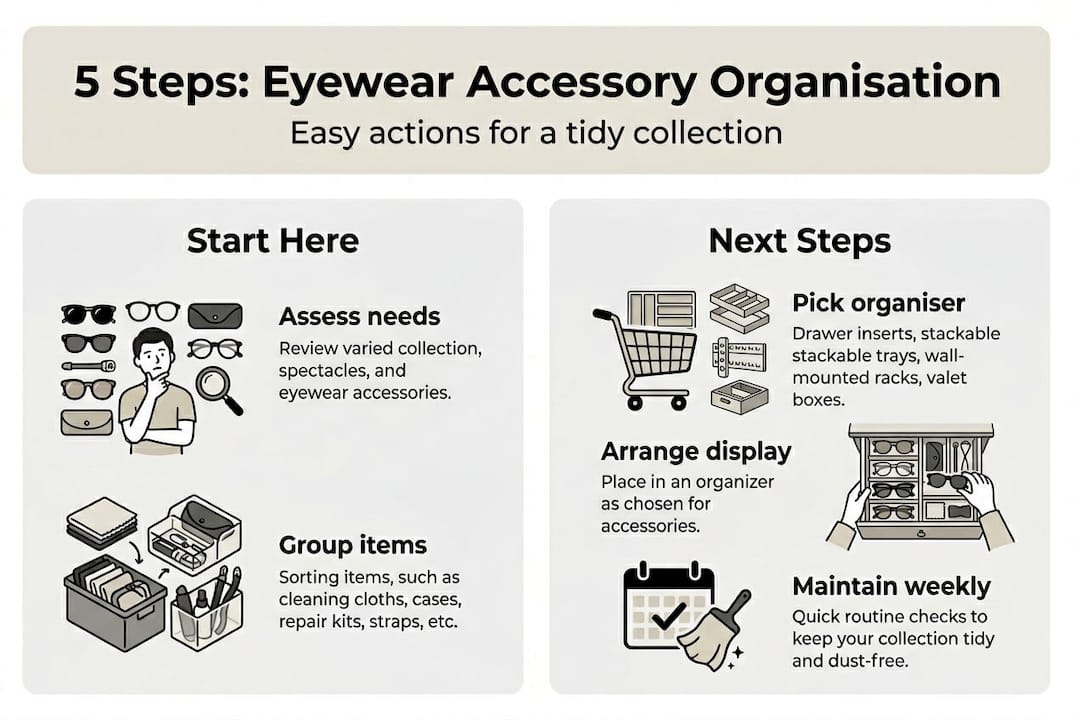
Now comes the satisfying part. Follow these steps to transform a cluttered collection into a neat, accessible display.
- Gather everything. Pull all eyewear and accessories from every drawer, bag, and shelf. Lay them out on a flat surface so you can see the full picture.
- Clean before storing. Wipe down each frame with a microfibre cloth. Clean lenses with an appropriate spray. Replace any worn cloths or cracked cases now rather than later.
- Sort by category and frequency. Group sunglasses together, reading glasses together, and accessories (chains, cloths, cases) separately. Within each group, move the pieces you use most to the front.
- Assign each item a slot. Place frames lens-up in velvet or padded slots. Hang chains on hooks or store in small compartments. Keep cleaning cloths and sprays in a designated drawer section.
- Layer open and closed storage. Use a wall rack or open tray for daily pieces. Use a lidded box or drawer for delicate or seasonal items. This mix gives you both quick access and proper protection.
- Label if needed. For larger collections, small labels on drawer sections or box lids make retrieval instant.
Pro Tip: Place the frames you reach for every day at eye level. Anything stored below eye level takes longer to find and is more likely to get buried.
As eyewear display tips point out, display cases add a decorative element but increase exposure to dust and sunlight. Wall racks and trays support aesthetics and quick access, while drawers and cases offer better dust protection. Balancing both approaches gives you the best of each.
For frames you want to last, read up on eyewear durability tips and styling sunglasses to get more from each pair.
Common mistakes and how to avoid them
Even a well-intentioned organisation system can go wrong. These are the most frequent pitfalls and how to sidestep them.
- Choosing the wrong slot size. Standard organiser slots are designed for average-sized frames. Oversized or wide frames often do not fit, leading to scratches or warping. Always check slot dimensions before buying.
- Storing lenses face-down. This is one of the fastest ways to scratch coatings. Always store frames lens-up or in padded slots.
- Ignoring sunlight exposure. UV light fades frame colours and degrades lens coatings over time. Keep display racks away from windows or use UV-filtering cases.
- Leaving delicate frames in generic slots. Designer or fragile frames deserve their original case or a velvet-lined box. Generic slots can put pressure on delicate hinges.
- Storing eyewear in the car. Heat warps frames and damages lens coatings rapidly. A car is one of the worst places to leave glasses, even briefly.
Important: Avoid lens-down placement, direct sunlight, and car storage due to temperature changes. Oversized frames may not fit standard slots. Always use original cases for delicate frames.
Maintenance matters too. Dust your organiser weekly with a soft cloth. Check monthly for any broken slots, loose hooks, or worn velvet. Replace damaged components promptly. A small spot-check takes less than five minutes and keeps the whole system working.
Investing in quality eyewear advice helps you understand which frames need the most careful storage, so you can prioritise protection where it counts.
Maintaining your organised eyewear: cleaning, protection and regular checks
Setting up a great system is only half the job. Keeping it that way requires a simple, consistent routine. The good news is that maintenance takes very little time once the initial setup is done.
Follow this monthly maintenance schedule:
- Dust all organiser surfaces. Use a dry microfibre cloth on trays, racks, and boxes. For acrylic, a slightly damp cloth removes fingerprints cleanly.
- Wipe down each frame. A quick clean with a microfibre cloth keeps lenses clear and frames looking their best.
- Reassess placement. Swap seasonal pieces (heavy winter frames, summer sunglasses) to the front or back depending on the time of year. Move any new additions into the system.
- Replace worn accessories. Discard frayed cleaning cloths, cracked cases, and broken chains. These items no longer protect your eyewear and take up valuable space.
- Check organiser integrity. Look for loose screws on wall racks, worn velvet in trays, or cracked acrylic. Fix or replace as needed.
- Involve your household. If others use the space, a quick reminder of the system keeps it tidy. Assign each person a section if the collection is shared.
As eyewear storage guidance confirms, using original cases and avoiding harsh conditions prolongs eyewear longevity. For travel, a dedicated travel glasses case keeps frames safe away from home. Reviewing your glasses care tips regularly ensures your maintenance routine stays effective.
Our take: why style and smart storage matter more than ever
Most storage advice focuses on tidiness. That is useful, but it misses something important. How you display your eyewear says something about your personal style. A beautifully arranged wall rack or a velvet tray on a dressing table is not just functional — it is a small act of self-expression.
Here is a view that often gets overlooked: hidden storage is not always the right choice for fashion-conscious people. Keeping your favourite frames visible means you actually wear them. Out of sight genuinely does mean out of mind. A curated display encourages you to rotate styles, try different looks, and get more value from every pair you own.
Organisation also protects your investment. Scratched lenses and warped frames are expensive to replace. A proper system, combined with attention to style and durability, extends the life of each piece significantly. The time you spend setting this up pays back quickly.
Think of your eyewear display as part of your home, not separate from it. When it looks good, you feel good reaching for it every day.
Find curated accessories and organisers for the perfect finish
If this article has prompted you to rethink your eyewear setup, the next step is finding accessories and organisers that match your style and budget. 4 Vision offers a range of options designed to complement quality frames without unnecessary expense.

Explore the eyewear accessories collection for protective cases, cleaning kits, and stylish storage solutions. Browse the reading glasses range to find frames worth organising properly. For a deeper look at what sets quality frames apart, visit the premium eyewear page. Every product is selected with both function and aesthetics in mind, so your organised space looks as good as it works.
Frequently asked questions
What is the best way to store eyewear accessories in small spaces?
Wall-mounted racks or pocket organisers save space and prevent scratches, making them ideal for compact rooms or flats. Velvet-lined slots add an extra layer of protection without requiring additional room.
How often should I clean or reorganise my eyewear organiser?
A monthly check and clean keeps accessories dust-free and easy to access, and ensures your system suits current styles and seasonal needs. A quick weekly dust of surfaces keeps things looking tidy between deeper sessions.
Are display organisers or closed cases better for protecting eyewear?
Closed cases offer better dust and sunlight protection, while display organisers suit those who prioritise aesthetics and quick access. As eyewear storage guidance notes, display cases expose frames to dust and sun, so closed cases are safer for long-term storage.
What should I avoid to prevent eyewear damage?
Avoid storing frames lens-down or in sunlight, and never leave glasses in a hot car. Always use original or velvet-lined cases for delicate or designer pieces.