

How UV protection in sunglasses shields your eyes in style
You slip on a pair of dark sunglasses, confident your eyes are safe from the sun. But here’s the catch: lens darkness has nothing to do with UV protection. Many stylish shades offer zero defence against harmful ultraviolet rays, leaving your eyes vulnerable to serious damage. Understanding how UV protection actually works transforms your sunglasses from a fashion accessory into essential eye health equipment. This guide reveals what truly protects your vision, how to spot certified eyewear, and where to find fashionable, sustainable options that deliver both style and safety for UK and USA consumers who refuse to compromise.
Table of Contents
- Key takeaways
- Understanding UV protection and its importance
- How sunglasses block UV rays: materials, coatings, and standards
- Limitations of UV protection and best practices for eye safety
- Choosing stylish, affordable, and sustainable UV-protective sunglasses
- Shop premium UV-protective sunglasses at 4 VISION
- Frequently asked questions
Key Takeaways
| Point | Details |
|---|---|
| Essential UV protection | Blocking UVA and UVB rays protects long term eye health. |
| Tint darkness misleads | Dark lenses do not guarantee UV protection and can increase UV exposure as pupils dilate in low light. |
| Certified standards matter | UV400, ANSI and ISO certifications confirm effective UV blocking. |
| Materials and coatings | Polycarbonate and Trivex lenses inherently block UV and coatings boost protection, even with dark tint. |
| Wraparound benefits | Wraparound styles reduce UV exposure by limiting side entry. |
Understanding UV protection and its importance
Ultraviolet radiation bombards your eyes every time you step outside. This invisible threat splits into two dangerous categories: UVA (315-400nm) and UVB (280-315nm) rays that cause cataracts, macular degeneration, and eyelid cancers. UVA rays penetrate deep into the eye, damaging the macula and lens over decades. UVB rays burn the cornea and contribute to pterygium, that fleshy growth creeping across your eye’s surface.
Prolonged exposure without proper protection accelerates these conditions. Cataracts cloud your lens, requiring surgical intervention. Macular degeneration destroys central vision, making reading and recognising faces impossible. Pterygium causes irritation and vision distortion. The delicate skin around your eyelids faces increased cancer risk from cumulative UV damage. These aren’t distant possibilities but documented outcomes of inadequate eye protection.
Effective UV protection blocks wavelengths up to 400 nanometres, the UV400 standard. This coverage eliminates virtually all harmful ultraviolet radiation before it reaches your cornea and lens. Protection comes from lens materials like polycarbonate, which inherently absorbs UV rays, and specialised coatings applied during manufacturing. The darkness of your lenses plays zero role in this process.
Here’s the dangerous twist: dark lenses without UV protection actually worsen eye damage. Your pupils dilate in the dimmed light, allowing more UV radiation to flood your retina. It’s like opening your front door wider to let burglars inside. Proper UV blocking reduces risks of premature ageing around the eyes, acute photokeratitis (snow blindness), and the chronic conditions mentioned earlier.
Pro Tip: Check certification labels before buying. A stylish frame means nothing if the lenses lack proper UV blocking technology.
When you buy sunglasses online for style and quality, prioritise UV400 certification over aesthetic appeal alone. Your future vision depends on this choice.
“The cumulative effect of UV exposure over a lifetime significantly increases the risk of serious eye conditions. Prevention through proper eyewear is far more effective than treatment.”
How sunglasses block UV rays: materials, coatings, and standards
The science behind UV blocking combines material properties with engineered coatings. Polycarbonate and Trivex lens materials inherently block UV rays, whilst UV blocking coatings enhance protection regardless of tint. These coatings contain special compounds that absorb or reflect ultraviolet wavelengths before they penetrate the lens surface. The process happens at the molecular level, invisible to your eyes but critical for your health.
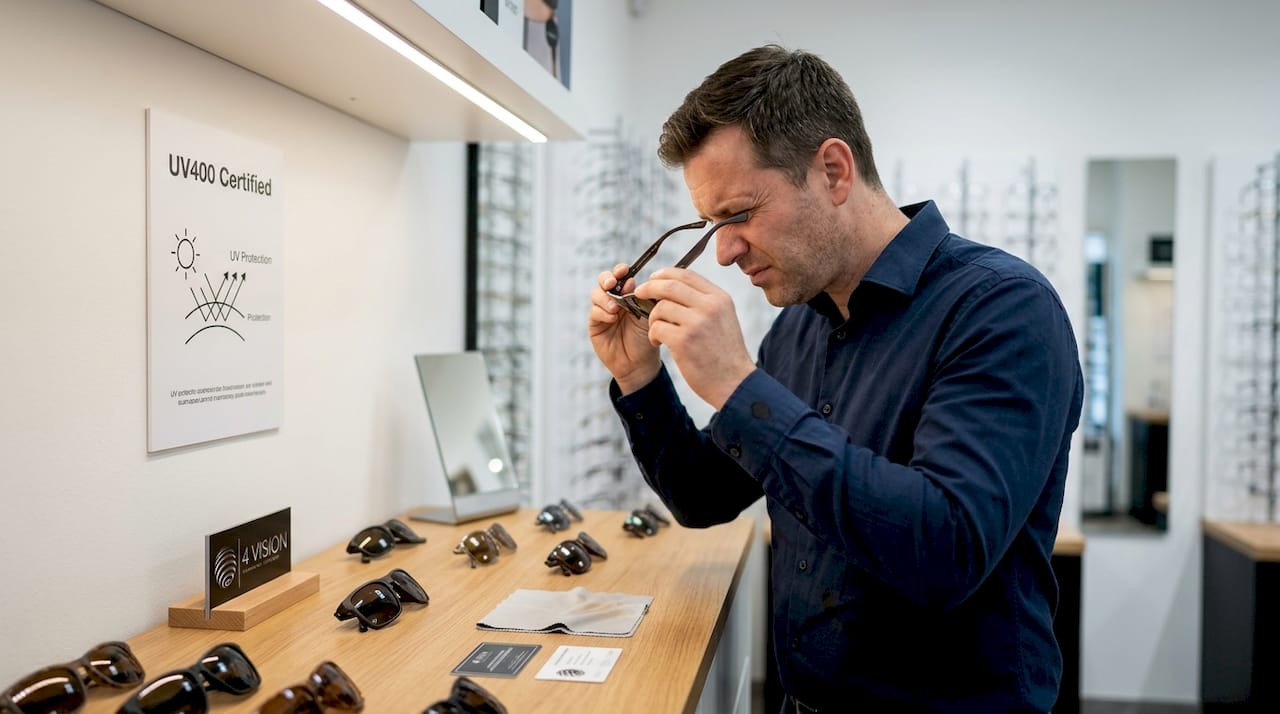
Dark lenses create a false sense of security. They reduce visible light, making outdoor glare more comfortable, but offer no inherent UV protection. Without proper coatings or materials, those fashionable dark shades cause pupil dilation that increases UV exposure risk. This counterintuitive reality catches many consumers off guard, leading to purchases based on appearance rather than protection.
Certified standards provide the verification you need. UV400 blocks wavelengths up to 400nm, ANSI Z80.3, and ISO 12312-1 define required UV blocking levels tested by spectrophotometer. These aren’t marketing buzzwords but rigorous testing protocols ensuring your sunglasses deliver advertised protection. UV400 represents near-complete blocking of UVA and UVB rays. ANSI Z80.3 governs USA standards for non-prescription sunglasses. ISO 12312-1 applies to UK, European, and global markets.
Sunglasses categories rate visible light transmittance (VLT), not UV protection:
- Category 0: 80-100% VLT, fashion or indoor use
- Category 1: 43-80% VLT, light sun conditions
- Category 2: 18-43% VLT, medium sun conditions
- Category 3: 8-18% VLT, bright sun (most common)
- Category 4: 3-8% VLT, extreme glare (not suitable for driving)
Category 3 suits most outdoor activities in bright sunlight. These ratings describe how much visible light passes through, completely separate from UV blocking capability. A Category 1 lens with UV400 protection outperforms a Category 4 lens without certification.
| Feature | UV protection impact | Common misconception |
|---|---|---|
| Lens darkness | None | Darker equals better protection |
| Price point | No correlation | Expensive means certified |
| Lens material | High (polycarbonate blocks UV) | All plastic lenses are equal |
| UV coating | Essential for full protection | Only needed on prescription lenses |
| Certification label | Guarantees tested protection | Just marketing language |
Certification labels ensure tested, reliable UV protection. Look for stickers, engravings, or packaging that explicitly states UV400, ANSI Z80.3, or ISO 12312-1 compliance. Reputable retailers provide this information prominently. Price and brand recognition don’t necessarily correlate with UV protection quality. A £15 pair with proper certification outperforms £200 designer frames lacking UV blocking technology.
Pro Tip: Verify premium eyewear quality by requesting certification documentation or having lenses tested at an optician before committing to expensive purchases.
The technical specifications matter more than brand prestige. Understanding these standards empowers you to make informed decisions that protect your vision without overspending on marketing hype.
Limitations of UV protection and best practices for eye safety
Even certified sunglasses have protection boundaries. Sunglasses generally block 76-89% of peripheral UV rays, allowing some exposure from wider solar angles. Standard frames leave gaps at the temples and above the nose bridge where UV radiation sneaks through. This peripheral exposure accumulates over time, particularly during extended outdoor activities when the sun sits at extreme angles.
Wraparound frames significantly reduce UV rays reaching eyes from the sides. These styles curve around your face, creating a barrier that conventional frames cannot match. The difference becomes substantial during activities like cycling, hiking, or beach days when you face prolonged sun exposure. Wraparound designs don’t eliminate peripheral UV completely but cut it by an additional 15-20% compared to standard frames.
Additional protection methods complement your sunglasses:
- Wide-brimmed hats or visors block overhead rays before they reach your eyes
- Seeking shade during peak UV hours (10am to 4pm) reduces total exposure
- UV-blocking contact lenses provide supplementary defence for the cornea
- Regular eye examinations detect early damage before symptoms appear
Contacts with UV protection offer some defence but remain supplementary. They cover only the cornea and lens, leaving surrounding eye structures exposed. Never rely on UV-blocking contacts as your sole protection. They work best paired with certified sunglasses for comprehensive coverage.
Pro Tip: Combine wraparound sunglasses offering style, comfort, and quality with a wide-brimmed hat for maximum UV defence during extended outdoor exposure.
Understanding these limitations helps you select and wear sunglasses more effectively. No single product provides absolute protection, but layering strategies dramatically reduces your cumulative UV exposure over a lifetime. The goal isn’t perfection but maximising defence through smart choices and complementary protective measures.
Realistic expectations prevent complacency. Your certified sunglasses form the foundation of eye protection, whilst additional measures address their inherent limitations. This comprehensive approach safeguards your vision far more effectively than relying on sunglasses alone.
Choosing stylish, affordable, and sustainable UV-protective sunglasses
Selecting the right sunglasses balances certification, fashion, sustainability, and budget. Start with non-negotiable requirements, then layer in personal preferences. This systematic approach ensures you never sacrifice eye health for style or affordability.
Step-by-step selection process:
- Verify UV400, CE (UK/EU), or ANSI (USA) certification before considering any other features
- Confirm lens material is polycarbonate or Trivex with UV coatings applied during manufacturing
- Evaluate frame coverage, prioritising styles that minimise peripheral gaps without compromising comfort
- Assess sustainability credentials, including recycled materials and carbon-neutral shipping options
- Compare prices across retailers, remembering certification matters more than brand prestige
- Read customer reviews focusing on durability, comfort during extended wear, and company responsiveness
Look for lenses made from polycarbonate or Trivex with UV coatings. These materials provide inherent UV blocking enhanced by surface treatments. Avoid generic “UV protection” claims without specific certification. Reputable brands state exact standards their products meet.
Frame styles should complement your fashion sense whilst providing good coverage. Wraparound designs maximise protection but don’t suit every face shape or style preference. Larger lenses with close-fitting frames offer a middle ground, reducing peripheral exposure whilst maintaining versatile aesthetics. Consider your primary use: beach days demand different coverage than urban commuting.
Certified stylish sunglasses with durable UV protection are available at affordable prices in UK and USA markets. Sustainability has become a growing consumer demand, driving innovation in eco-friendly eyewear. Brands using recycled plastics, biodegradable acetate, and carbon-neutral shipping prove that environmental responsibility doesn’t require premium pricing.
Key features for sustainable eyewear:
- Recycled or bio-based frame materials reducing plastic waste
- Minimal packaging using recyclable or compostable materials
- Carbon-neutral or carbon-negative shipping offsetting delivery emissions
- Transparent supply chains detailing manufacturing ethics and environmental impact
- Durability engineering extending product lifespan and reducing replacement frequency
| Priority | What to check | Where to verify |
|---|---|---|
| UV certification | UV400, ANSI, or ISO labels | Product packaging, retailer specifications |
| Lens quality | Polycarbonate or Trivex material | Product description, manufacturer details |
| Frame coverage | Wraparound or close-fitting design | Try-on or detailed product images |
| Sustainability | Recycled materials, carbon-neutral shipping | Brand sustainability page, certifications |
| Price value | Certification at accessible price point | Cross-retailer comparison, customer reviews |
Prioritise customer reviews and optician verification for confidence in protection. Reviews reveal real-world durability and comfort issues that specifications cannot capture. If purchasing high-end frames, have an optician verify UV blocking with a spectrophotometer before removing tags. This £10-20 service prevents costly mistakes.
Pro Tip: Explore stylish sunglasses options from retailers offering certified UV protection, sustainability commitments, and accessible pricing without luxury markups.
Balance style, affordability, durability, and environmental responsibility when selecting sunglasses. These factors need not compete. The UK and USA markets now offer numerous brands delivering certified UV protection in fashionable frames at honest prices. Your purchasing power supports companies prioritising eye health and environmental stewardship over marketing hype.
The right sunglasses exist at your price point. Patience in research pays dividends in years of comfortable, protective wear. Don’t settle for compromised UV blocking just because a frame looks appealing or carries a famous logo. Certified protection, sustainable practices, and style coexist in today’s eyewear market.
Shop premium UV-protective sunglasses at 4 VISION
Your eyes deserve certified protection wrapped in contemporary style. 4 VISION offers a curated selection of UV-protective sunglasses combining fashion-forward designs with rigorous safety standards. Every pair meets UV400 certification, ensuring comprehensive blocking of harmful UVA and UVB rays without compromising on aesthetics.
Affordable options fill our stylish sunglasses collection without sacrificing quality or eye protection. We’ve eliminated luxury markups, passing savings directly to consumers who value both their vision and their budget. Expertly designed frames ensure lasting comfort during extended wear, whilst durable construction means your investment protects you season after season.
Explore collections suitable for diverse tastes and ages across the UK and USA. From classic aviators to contemporary wraparound styles, our range addresses every aesthetic preference and face shape. Sustainability initiatives including carbon-neutral shipping align your eyewear choice with environmental values. Discover how premium eyewear quality and sunglasses offering style and comfort transform daily eye protection into an effortless expression of personal style.
Frequently asked questions
What does UV400 mean on sunglasses?
UV400 means the lenses block ultraviolet rays up to 400 nanometres, covering all UVA and UVB wavelengths. This rating ensures near-complete UV protection for your eyes, preventing the harmful radiation that causes cataracts, macular degeneration, and eyelid cancers. Always verify UV400 certification on labels or packaging before purchasing sunglasses.
Are darker lenses better for UV protection?
Darker lenses without UV coating can increase eye damage risk by dilating pupils and allowing more UV radiation to enter. UV protection depends entirely on lens material and coatings, not darkness or tint intensity. A light-tinted lens with UV400 certification provides superior protection compared to dark lenses lacking proper UV blocking technology.
How can I verify if my sunglasses provide proper UV protection?
Look for UV400, CE, or ANSI certification labels on frames, lenses, or packaging when purchasing. Have your sunglasses tested at an optician using a spectrophotometer if you’re unsure about existing pairs. Purchase from reputable retailers offering certified products with clear documentation, as premium eyewear quality includes transparent certification information.
Can stylish sunglasses be affordable without compromising on UV protection?
Affordable sunglasses absolutely can have certified UV protection if you check labels and buy from reputable brands. Price doesn’t determine UV blocking capability, as certification standards apply regardless of cost. Sustainability-focused eyewear brands offer stylish, safe options within budget, proving that eye health and fashion coexist at accessible price points.