

How to pick glasses frames for style and fit in 2026
Choosing glasses frames that fit properly makes a significant difference to your daily comfort and vision clarity. Many people experience headaches, nose marks, or slipping frames simply because they haven’t matched their eyewear to their face measurements and shape. This guide walks you through the essential measurements, face shape matching, and practical try-on steps to help you select frames that look great and feel comfortable all day long. Whether you’re buying your first pair or upgrading your current glasses, understanding these fundamentals ensures you invest in eyewear that truly works for you.
Table of Contents
- Understanding Frame Measurements And Why They Matter
- Matching Glasses Frames To Your Face Shape
- Steps To Try On Frames And Ensure The Perfect Fit
- Common Mistakes To Avoid When Picking Glasses Frames
- Explore Stylish And Premium Eyewear Options At 4 Vision
- Frequently Asked Questions About Choosing Glasses Frames
Key takeaways
| Point | Details |
|---|---|
| Frame measurements matter | Lens width, bridge width, and temple length directly affect comfort and vision quality. |
| Match your face shape | Different face shapes suit specific frame styles that balance your natural features. |
| Try on properly | Check symmetry, nose support, temple fit, and visual clarity during every fitting. |
| Avoid common mistakes | Don’t prioritise price over fit or skip professional eye examinations. |
| Regular eye tests | NHS recommends eye tests every two years to maintain correct prescriptions. |
Understanding frame measurements and why they matter
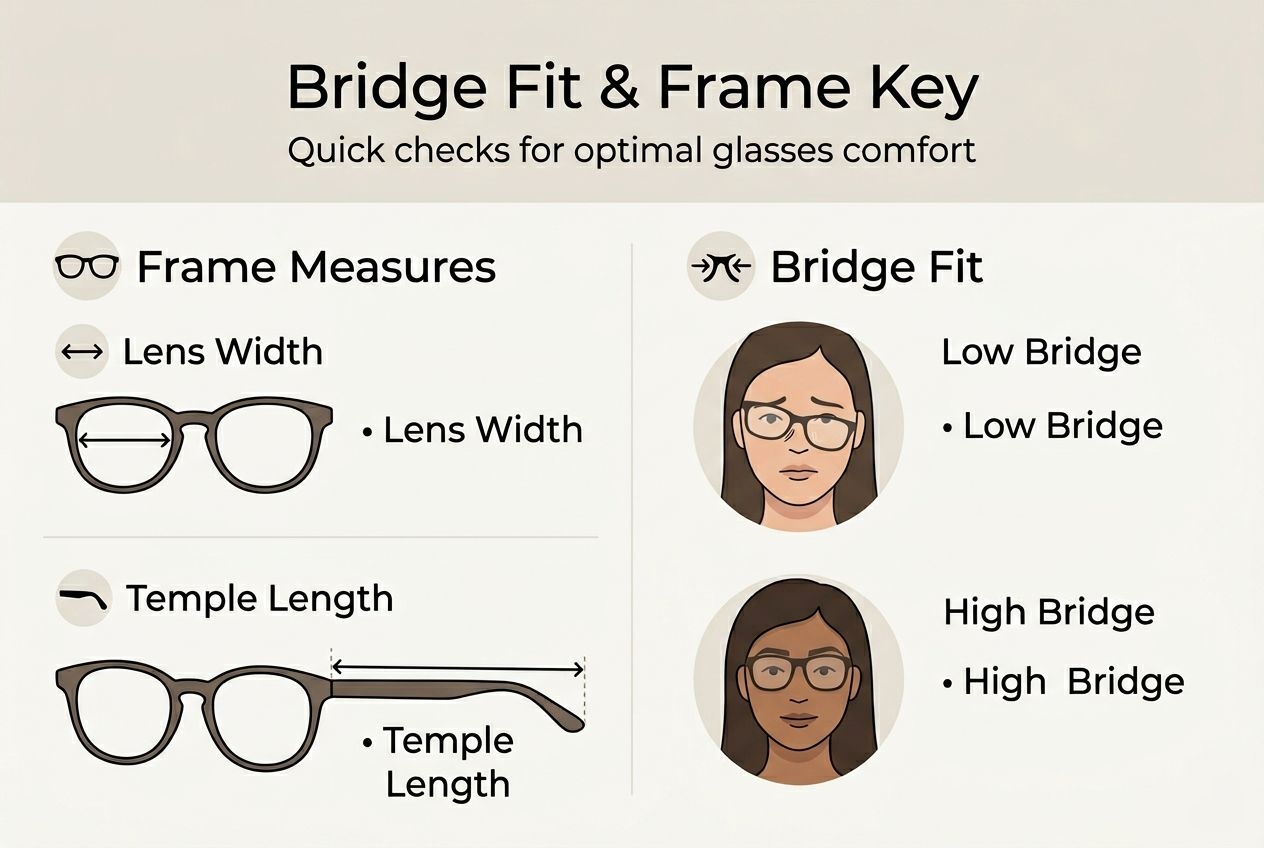
Proper frame fit directly impacts both visual comfort and long-term eye health. Three critical measurements determine whether glasses will suit your face: lens width, bridge width, and temple length. Understanding these dimensions helps you assess fit accurately and avoid the discomfort of poorly matched frames.
Lens width affects how much of your eye area the frame covers and influences your peripheral vision. Lens width measurements typically range from 44mm to 62mm. Smaller measurements suit narrow faces, whilst larger measurements work better for wider facial structures. If lenses are too narrow, you’ll notice restricted side vision. Too wide, and the frames will slide down your nose constantly.
Bridge width determines how the glasses rest on your nose and how they position relative to your eyes. Bridge width measurements typically range from 14mm to 24mm. A bridge that’s too narrow pinches and leaves red marks. One that’s too wide causes frames to sit too low, misaligning your vision through the lenses. Understanding eyewear fit ensures you avoid these common problems.
Temple length ensures glasses rest comfortably behind your ears without slipping forward or creating pressure points. Temple length measurements typically range from 135mm to 150mm. Temples that are too short won’t reach your ears properly, causing constant adjustments. Temples that are too long curve awkwardly and create uncomfortable pressure.
Pro Tip: Measure your current well-fitting glasses to find your ideal measurements. Look for numbers printed on the inside of the temple arm, usually formatted as 52-18-140, representing lens width, bridge width, and temple length respectively.
Here’s a quick reference for standard frame measurements:
| Measurement | Typical Range | Impact on Fit |
|---|---|---|
| Lens Width | 44mm to 62mm | Affects visual field coverage and frame stability |
| Bridge Width | 14mm to 24mm | Determines nose comfort and lens alignment |
| Temple Length | 135mm to 150mm | Controls how frames sit behind ears |
When ordering glasses online, these measurements become even more critical since you can’t physically try frames before purchasing. Following an online glasses order guide helps you navigate the process confidently.
Matching glasses frames to your face shape
Identifying your face shape helps you choose frames that complement your natural features and create balanced proportions. Common face shapes include round, oval, square, heart, and diamond. Each shape suits specific frame styles that either contrast with or enhance your facial angles and curves.
Round faces feature soft curves with similar width and length proportions. Angular frames add definition and create the illusion of length. Rectangular or square frames work particularly well, as they provide structure that balances softer facial features. Avoid round frames, which can make your face appear fuller.
Oval faces have balanced proportions with gently curved lines and a slightly narrower chin than forehead. This versatile shape suits almost any frame style. Experiment with geometric, round, or square frames to express your personal style. The key is maintaining the natural balance rather than overwhelming your features.

Square faces feature strong jawlines and angular features with similar width at forehead and jaw. Rounded or oval frames soften these angles and create harmony. Cat-eye styles also work well, drawing attention upward and adding curves. Avoid square or rectangular frames that emphasise existing angles.
Heart-shaped faces have wider foreheads and narrower chins, creating an inverted triangle. Bottom-heavy frames like aviators or frames with decorative lower rims balance the proportions. Rimless or light-coloured frames also work well, as they don’t add visual weight to the upper face.
Diamond faces feature narrow foreheads and chins with wider cheekbones. Oval or cat-eye frames complement these angles beautifully. Rimless styles also suit diamond faces, as they don’t compete with your natural bone structure. Avoid narrow frames that emphasise the width of your cheekbones.
Bridge fit plays a crucial role alongside face shape. If your bridge sits at or below your pupil level, you likely need a smaller bridge size between 16mm and 18mm. This ensures proper alignment and prevents frames from sitting too low on your face.
Pro Tip: Use a mirror or take a photo of your face to help identify your face shape objectively. Pull your hair back and look at the overall outline rather than individual features.
Exploring fashionable glasses helps you see how different frame shapes work with various face types. Similarly, reviewing a sunglasses style and fit guide provides additional insights for outdoor eyewear choices.
Steps to try on frames and ensure the perfect fit
Trying on glasses properly involves more than just looking in the mirror. A systematic approach ensures you evaluate both comfort and visual clarity before making your final choice. Follow these steps to verify that frames truly suit your needs.
First, check that frames sit squarely and symmetrically on your face. Stand in front of a mirror and look straight ahead. The frame should be level, with both lenses at the same height. Tilt your head gently from side to side. Frames shouldn’t shift or slide during normal movements.
Second, assess how the nose pads or bridge support the frame’s weight. You should feel gentle, even pressure without any pinching or red marks. The bridge shouldn’t touch your cheeks when you smile. If you notice discomfort after just a few minutes, the fit isn’t right.
Third, examine how temples fit behind your ears. They should rest comfortably without pinching or creating pressure points. The temples should follow the contour of your head naturally. If they stick out or dig in, try a different temple length or style.
Fourth, verify that your vision through the lenses is clear and properly centred. Your pupils should align with the optical centre of each lens. Look around the room, focusing on objects at different distances. Any distortion or blurriness indicates poor lens positioning.
Approximately 16% of progressive addition lenses have fitting points outside clinically acceptable tolerances, highlighting how critical proper fitting is. This statistic underscores why taking time during try-on matters so much for your long-term comfort and vision quality.
Create a simple checklist to evaluate each pair:
- Frames sit level and symmetrical
- No pressure marks on nose or ears
- Temples rest comfortably without pinching
- Vision is clear and centred
- Frames don’t slide during head movements
- Style complements your face shape
Pro Tip: Wear the frames for at least 10 to 15 minutes during your fitting appointment. Initial comfort can fade quickly if frames aren’t truly suitable, so give yourself time to notice any issues.
Here’s a quick reference for evaluating fit quality:
| Fit Element | What to Check | Red Flags |
|---|---|---|
| Frame Position | Level and symmetrical on face | Tilting, uneven height |
| Nose Support | Even pressure, no marks | Pinching, sliding down |
| Temple Fit | Comfortable behind ears | Sticking out, digging in |
| Vision Clarity | Clear, centred through lenses | Distortion, blurriness |
Understanding the importance of eyewear fit helps you appreciate why these steps matter. Following detailed glasses try-on steps ensures you don’t overlook critical fit factors.
Common mistakes to avoid when picking glasses frames
Many people make avoidable errors when choosing glasses frames, leading to discomfort and dissatisfaction. Understanding these pitfalls helps you make smarter decisions that balance style, comfort, and value.
Choosing frames based solely on price often sacrifices fit quality and durability. Cheap frames may use inferior materials that break easily or cause skin irritation. Whilst budget matters, prioritising cost over comfort creates long-term problems. Invest in frames that meet your measurements and quality standards, even if they cost slightly more.
Ignoring accurate measurements leads directly to discomfort and vision issues. Poorly fitting frames can strain your eyes and affect your vision quality. Without knowing your lens width, bridge width, and temple length, you’re essentially guessing. Take time to measure properly or work with a professional who can assess your needs.
Skipping professional advice or regular eye examinations risks wearing the wrong prescription. Your vision changes over time, and outdated prescriptions strain your eyes unnecessarily. Even if your current glasses feel comfortable, the lenses might not provide optimal correction anymore. Regular check-ups ensure your eyewear supports your current vision needs.
Following fashion trends blindly can undermine comfort and suitability. Oversized frames might look stylish but can overwhelm smaller faces or create balance issues. Similarly, ultra-narrow frames might not provide adequate coverage for your prescription. Choose styles that complement your face shape whilst meeting your functional requirements.
Rushing the selection process often results in buyer’s remorse. Take time to try multiple styles and compare how they feel after wearing them for several minutes. Don’t let sales pressure or time constraints force you into a hasty decision. Your glasses are something you’ll wear daily, so the choice deserves careful consideration.
“Poorly fitting frames can strain your eyes and affect your vision quality, making proper selection essential for both comfort and health.”
Neglecting to consider your lifestyle needs creates practical problems. If you’re active or play sports, you need frames that stay secure during movement. If you work at a computer all day, you might benefit from specific lens coatings. Think about how you’ll actually use your glasses, not just how they look.
Key mistakes to avoid:
- Prioritising price over proper fit and quality
- Guessing measurements instead of measuring accurately
- Skipping regular eye examinations
- Choosing trendy styles that don’t suit your face
- Rushing the selection without adequate try-on time
- Ignoring lifestyle and usage requirements
Recognising eyewear fit importance helps you avoid these common errors. Similarly, learning styling sunglasses tips ensures you balance fashion with function across all your eyewear choices.
Explore stylish and premium eyewear options at 4 Vision
Now that you understand how to choose frames that fit properly and complement your style, it’s time to explore quality options that meet these criteria. 4 Vision offers carefully curated eyewear collections that combine style, comfort, and durability at honest prices.
Our premium eyewear selection features frames crafted from high-quality materials designed for lasting comfort. Each piece balances aesthetic appeal with practical functionality, ensuring you don’t compromise on either element. We’ve eliminated luxury markups to make premium quality accessible.
Browse our extensive sunglasses collection for outdoor eyewear that protects your eyes whilst complementing your face shape. From classic aviators to contemporary geometric designs, you’ll find styles suited to various face shapes and personal preferences. Every pair combines UV protection with fashionable design.
Our reading glasses range includes options for different magnification needs and style preferences. Whether you need glasses for occasional reading or daily computer work, we offer frames that deliver both clarity and comfort. Fast delivery and carbon-neutral shipping reflect our commitment to customer satisfaction and sustainability.
Frequently asked questions about choosing glasses frames
How often should I have my eyes tested?
Regular eye tests are recommended every two years by the NHS for adults with no known vision problems. If you’re over 70, have diabetes, glaucoma, or a family history of eye conditions, annual tests are advisable. Children and young people should have their eyes tested before starting school and then every two years unless advised otherwise by an optician.
What measurements matter most when buying glasses?
The three critical measurements are lens width, bridge width, and temple length, which determine how frames sit on your face and support your vision. Lens width affects your visual field coverage, bridge width impacts nose comfort and lens alignment, and temple length controls how frames rest behind your ears. Understanding eyewear fit helps you prioritise these dimensions correctly.
Can I get an NHS sight test for free?
An NHS sight test is free of charge if you’re in one of the eligible groups and the test is considered clinically necessary. Eligible groups include those under 16, under 19 and in full-time education, aged 60 or over, or those with certain medical conditions like diabetes or glaucoma. You’re also eligible if you receive certain benefits or have a valid NHS tax credit exemption certificate.
What should I do if I’m unhappy with my optician service?
If you’re not happy with the service or treatment provided, you have the right to make a complaint. Start by speaking directly with the practice manager or optician to resolve the issue informally. If this doesn’t work, follow the formal complaints procedure outlined by the practice. You can also contact the General Optical Council or NHS England if you remain dissatisfied with the response.
How can I care for my glasses to maintain fit and style?
Clean your glasses daily using lukewarm water and a small amount of washing-up liquid, then dry with a clean, lint-free cloth. Avoid using paper towels or clothing, which can scratch lenses. Store glasses in a protective case when not wearing them to prevent damage. Have your frames adjusted professionally every six months to maintain proper fit, as normal wear can loosen screws or bend temples slightly over time.